
 Image 1 of 1
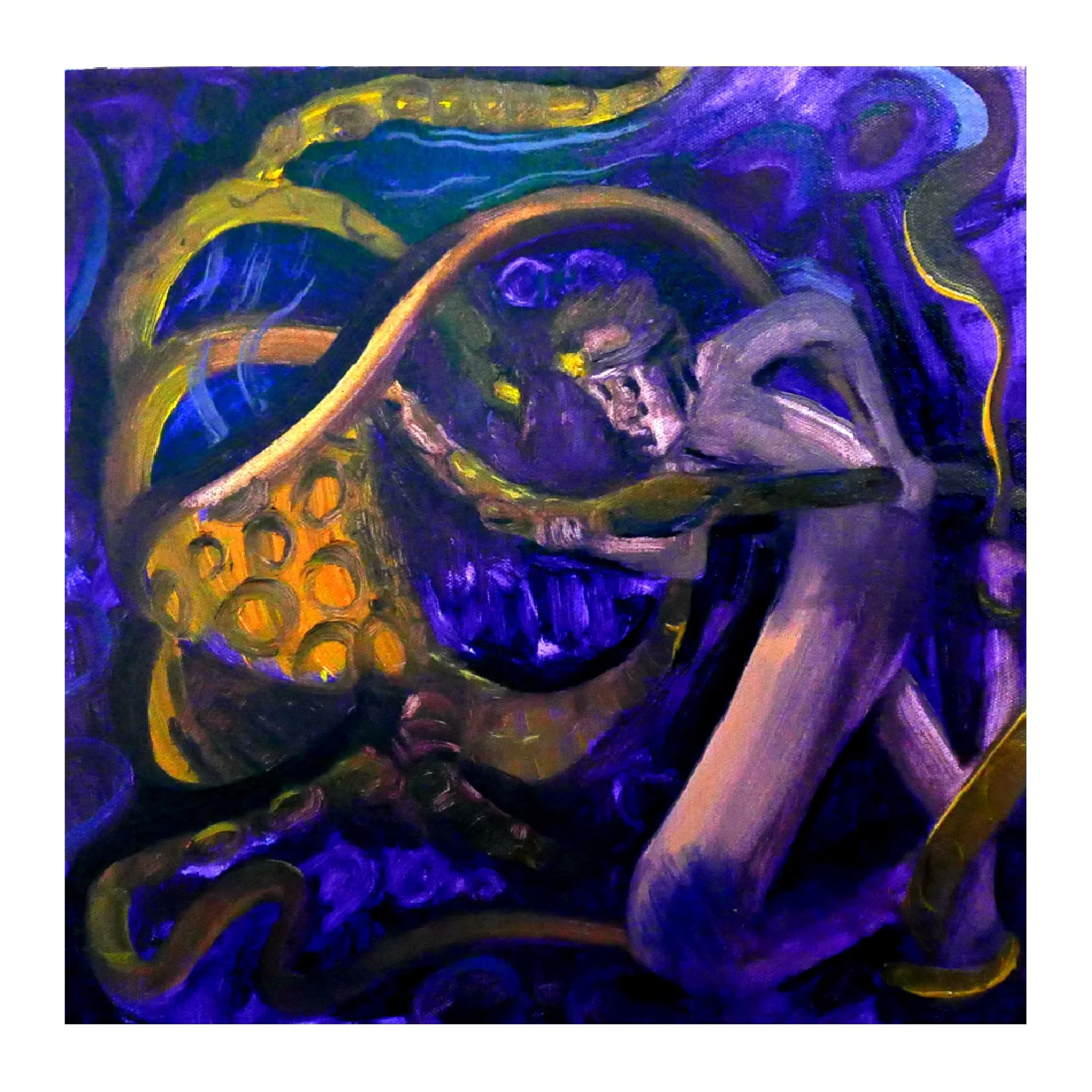
12 × 12 inch painting on canvas
The 1940 Tacoma Narrows Bridge, nicknamed “Galloping Gertie” for its vertical movement during windy conditions, opened on July 1 and collapsed into the Puget Sound later that same year on the stormy morning of November 7. The bridge collapse created an artificial reef for sea creatures to inhabit and cling to the old roadway. Some say a 600-pound King Octopus was trapped and buried in the wreckage. Others say the creature caused the disaster and now tackles divers into the depths below the reconstructed bridge.
This myth of a singular, grand creature is blurred by the fact of the Giant Pacific octopus, the largest known species of octopus, which inhabits the Puget Sound.
In 1957, one of the first reported octopus wresting events took place in the Puget Sound near Tacoma, Washington. Two hundred people gathered to watch a team from Portland, Oregon win by catching an eighty-pound octopus. In April 1963, 111 divers competed in the World Octopus Wresting Championships. Skin divers without breathing devices who discovered the largest octopuses were awarded the most points. These events quickly died out from lack of interest as a culture of protecting marine wildlife grew. In 1976, Washington state making it illegal to capture or harass an octopus.
In reality, these events, while sounding dramatic, were anything but. Given that Octopuses are gentle creatures that would rather burrow than put up a fight, what took place was a highly intelligent and dismissed creature being taken advantage of in the name of pathetic spectacle.
12 × 12 inch painting on canvas
The 1940 Tacoma Narrows Bridge, nicknamed “Galloping Gertie” for its vertical movement during windy conditions, opened on July 1 and collapsed into the Puget Sound later that same year on the stormy morning of November 7. The bridge collapse created an artificial reef for sea creatures to inhabit and cling to the old roadway. Some say a 600-pound King Octopus was trapped and buried in the wreckage. Others say the creature caused the disaster and now tackles divers into the depths below the reconstructed bridge.
This myth of a singular, grand creature is blurred by the fact of the Giant Pacific octopus, the largest known species of octopus, which inhabits the Puget Sound.
In 1957, one of the first reported octopus wresting events took place in the Puget Sound near Tacoma, Washington. Two hundred people gathered to watch a team from Portland, Oregon win by catching an eighty-pound octopus. In April 1963, 111 divers competed in the World Octopus Wresting Championships. Skin divers without breathing devices who discovered the largest octopuses were awarded the most points. These events quickly died out from lack of interest as a culture of protecting marine wildlife grew. In 1976, Washington state making it illegal to capture or harass an octopus.
In reality, these events, while sounding dramatic, were anything but. Given that Octopuses are gentle creatures that would rather burrow than put up a fight, what took place was a highly intelligent and dismissed creature being taken advantage of in the name of pathetic spectacle.