BETWEEN THE SEA AND ME
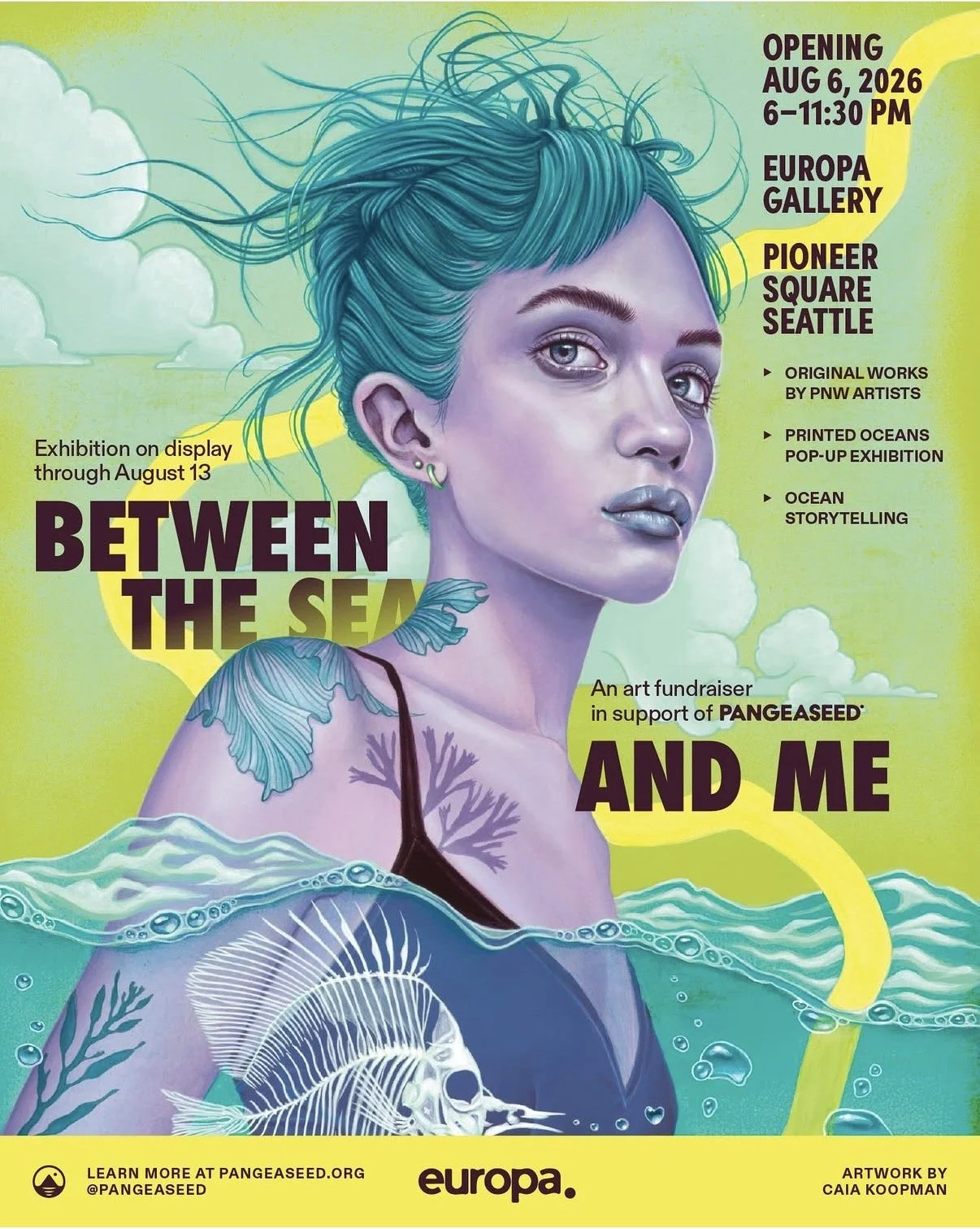

PangeaSeed: Between the Sea and Me
Between the Sea and Me invites artists and audiences to reflect on personal connections to the ocean through themes of memory, emotion, place, future generations, and environmental stewardship.
Rather than approaching ocean conservation through a single issue or prescribed message, the exhibition centers on intimate, imaginative, and lived relationships with the sea.
The show features a collection o original works created specifically or the exhibition by Pacific Northwest and regional artists, co-curated with Seattle-born artist and longtime PangeaSeed collaborator Stevie Shao.
In addition, a Printed Oceans pop-up showcase features selected fine art editions from PangeaSeed’s international artist collaborations.
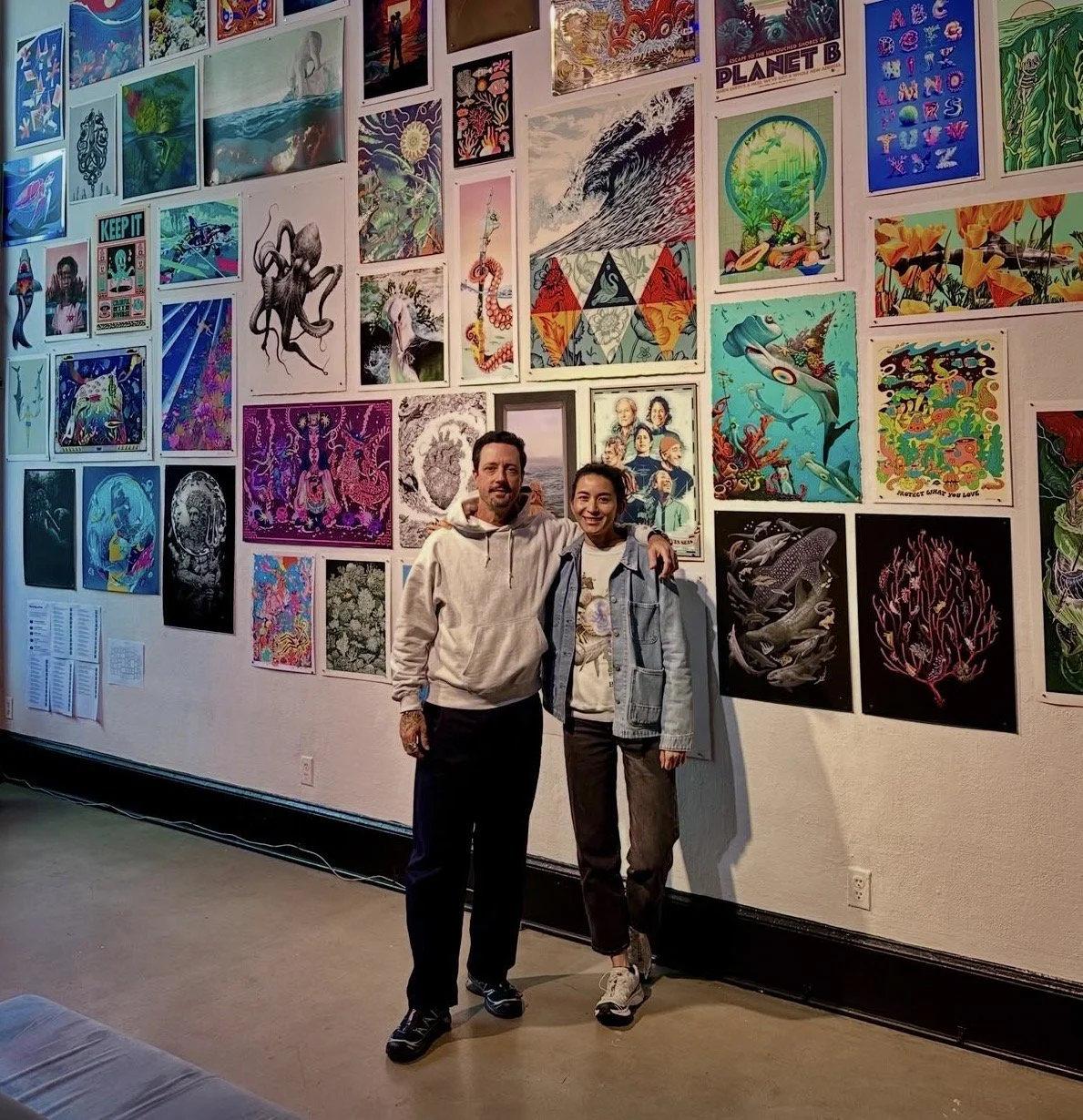
Tre Packard and Akira Biondo of PangeaSeed
BETWEEN THE SEA AND ME GALLERY
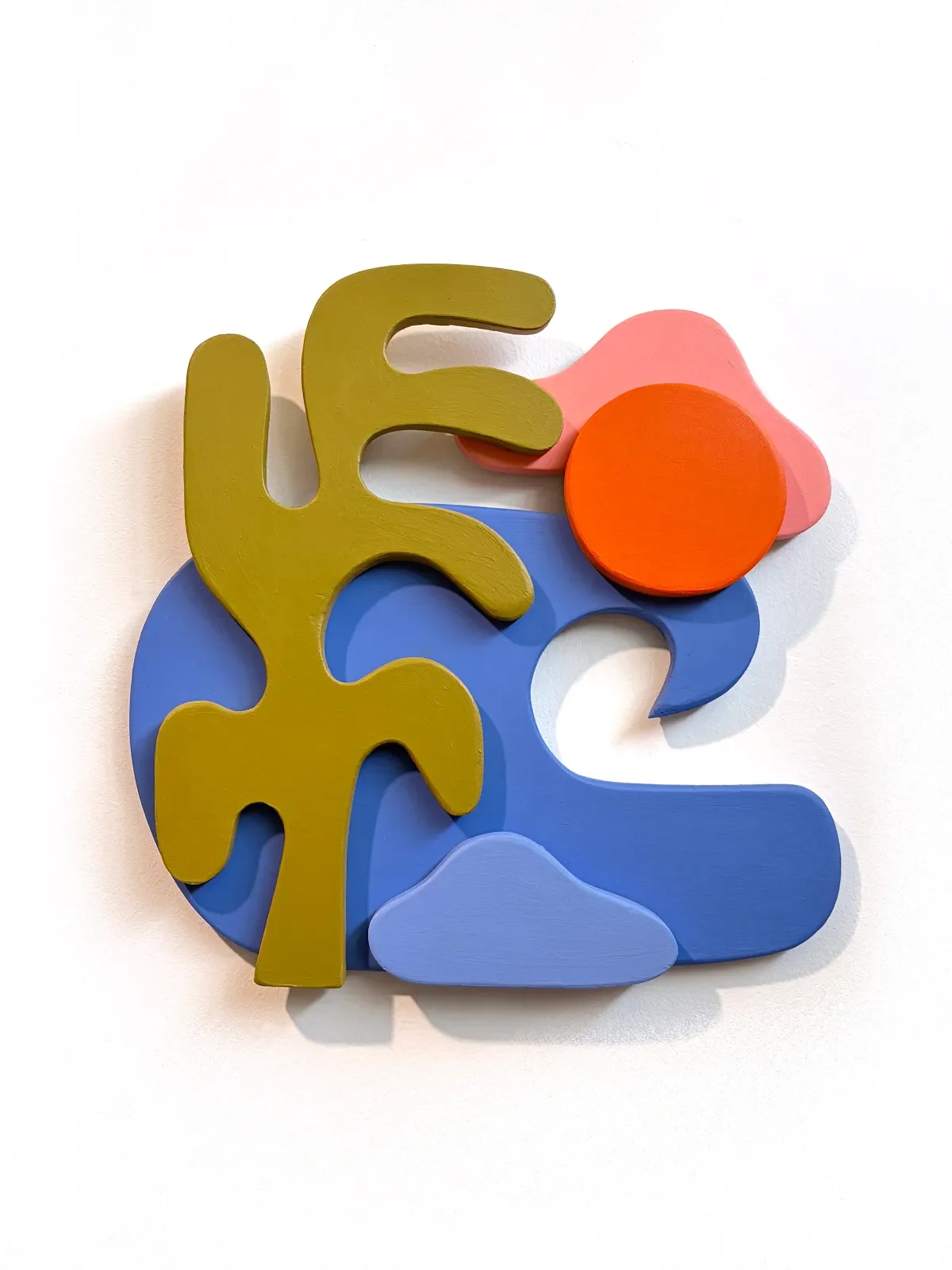
12 × 12 × 1 inch Original wall sculpture of painted wood cuts with acrylic and pine
Ali Bruce: The ocean has shaped me from a sharp rock into a soft pebble. There’s a spot on the shore I go to when I need to feel lighter. I float in the waves with my ears in the water and the noise of the world becomes silent, the thoughts in my head are released for a moment. When I’m floating in the salt water I feel less pain in my body, it makes me feel small in a world that can feel overwhelmingly large. Watching the tide become high and the strength of the waves rolling in reminds me of strength without will, to be naturally powerful and guided by the moon. The oceans shows us that we’re all the same when we’re connected to the water and the sky.
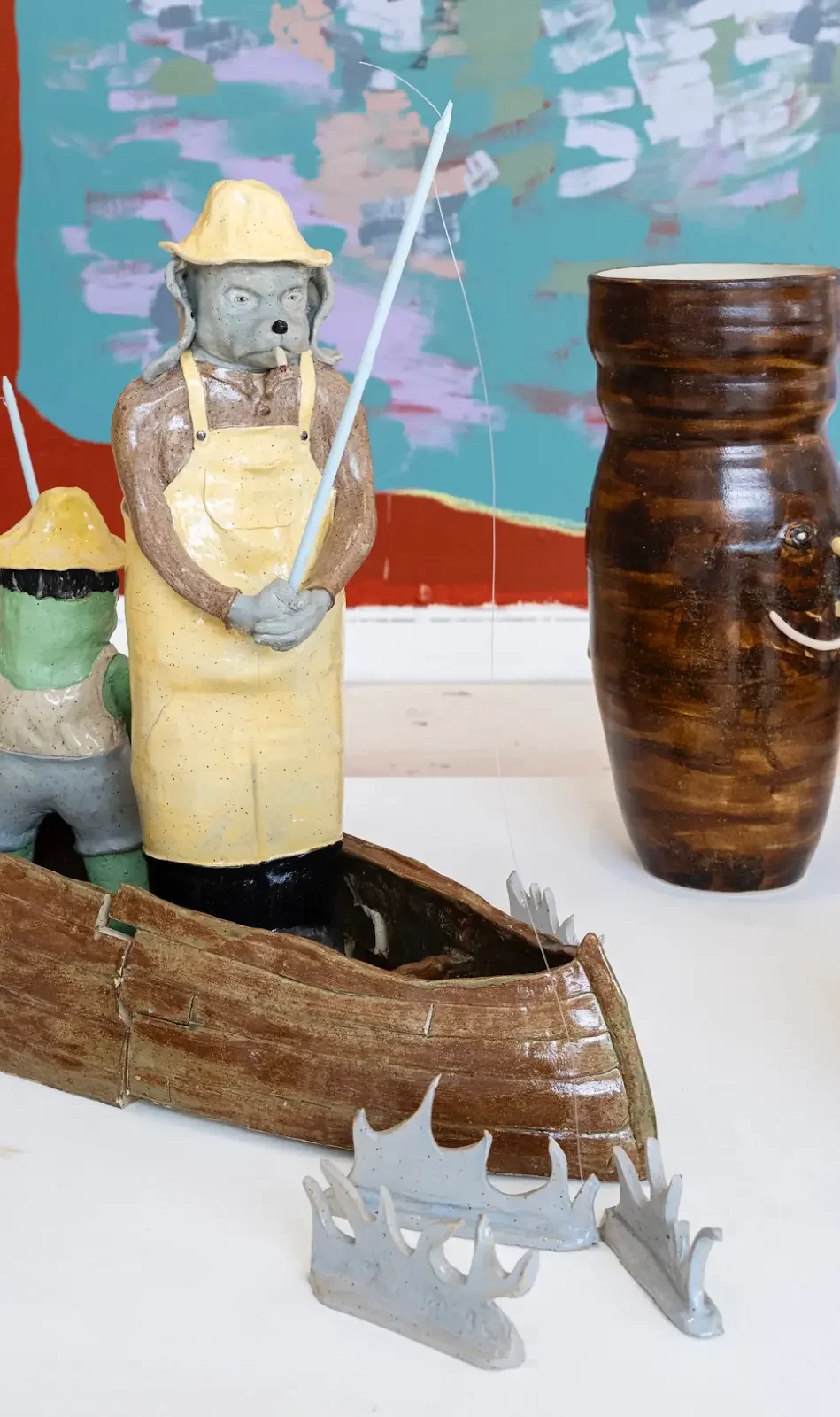
14 inch tall Ceramic sculpture
Calvin Wong: What does the ocean give us? Honestly, it gives us an excuse to slow down and just sit with our own thoughts for a bit. There’s something about being near that much water that forces you to drop the rush, clear out the noise, and just exist. Beyond everything it holds, the ocean gives us room to take a breath and let our minds drift momentarily. It’s a space where time moves a little differently, a reminder that not every moment needs to be productive, and that sometimes just showing up, tuning in, and watching the water move is the whole point.
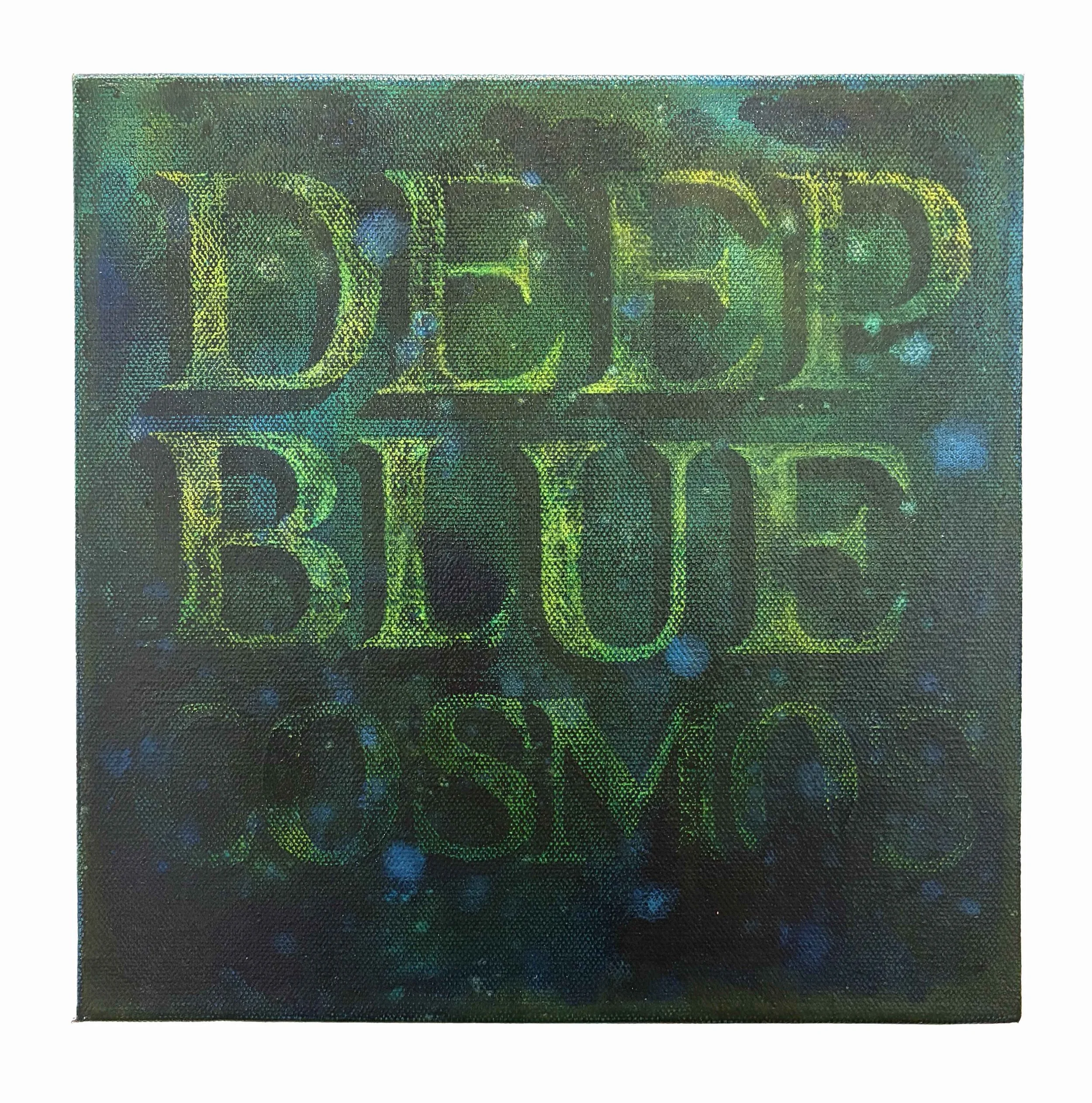
12 × 12 × 2 inch painting on canvas
Heidi Tullmann: The ocean is our earthly cosmos: one of close relations and deep holding. Just like celestial bodies, the ocean reminds me how small I am. She feels like a great equalizing force; an inevitable destination; a collective organ that reflects the health of our shared body. She turns trash into treasure and lends a wise ear to our deepest wonderings and fears. She doesn't speak the answer, but somehow holds all the mystery and welcomes us to touch its edges >>> I imagine a future where the ocean is listened to and prioritized by humans, given rest and space, asked permission from, and collaborated with instead of extracted from and dumped into.
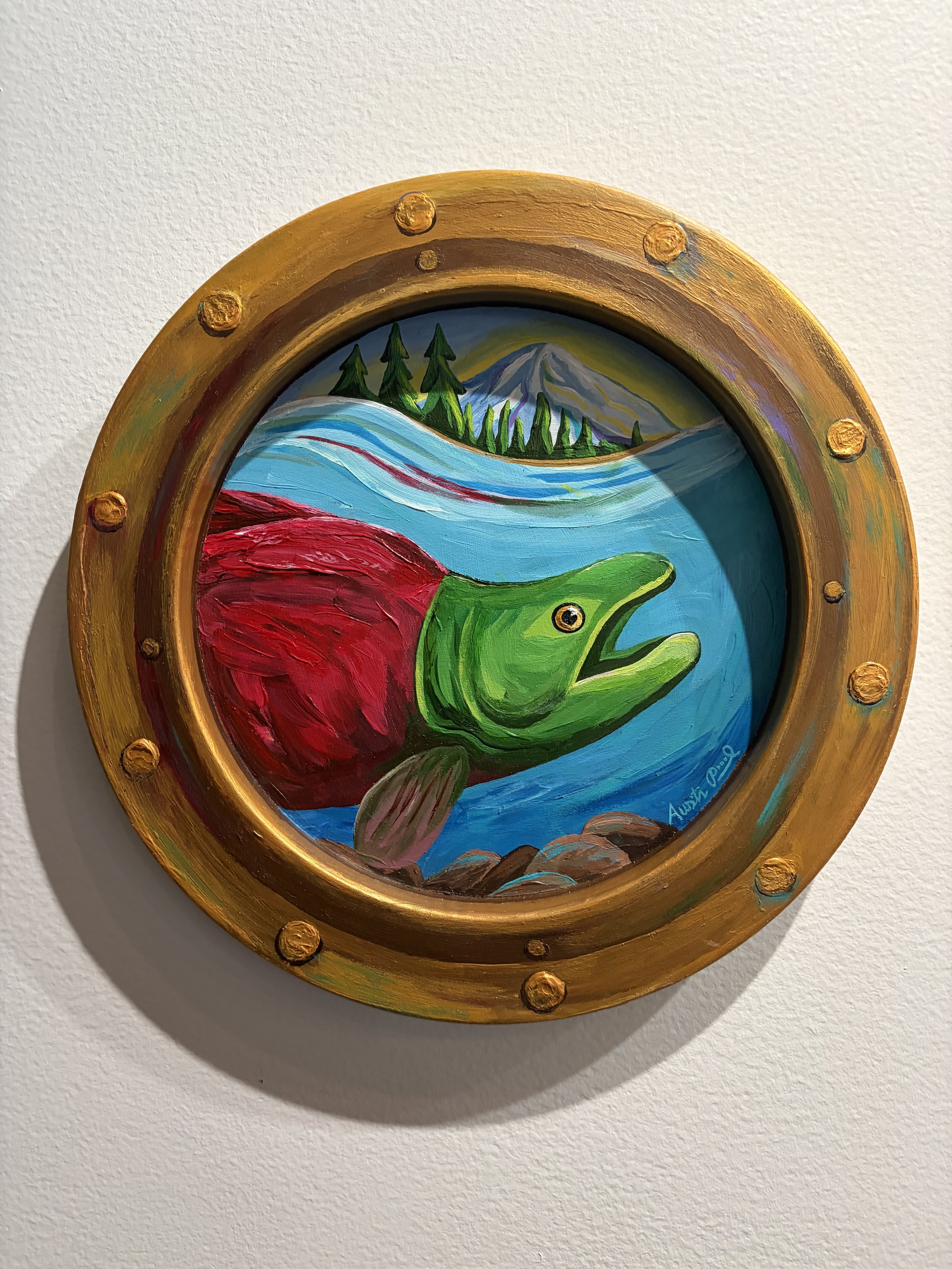
12 × 12 inch diameter Acrylic painting on cradled wood panel
Austin Picinich: The ocean gives us proof that home is worth fighting current for. Salmon migrate home from the Pacific to the Puget Sound, through the Ballard Locks, and back to their exact birth stream to spawn. "Home" is not just ours - we share it.
I grew up along Juanita Creek, one of the spawning streams that feeds Lake Washington. Thousands of salmon once called Juanita home. After all these years, several streams have already met local extinction. Like a bridge over troubled water, these once-wild waterways now flow below paved roads… constrained by culverts, slip slidin’ away under decades of development and apathy.
That’s when I started my Save Our Salmon (S.O.S.) mural series. So far, I’ve painted 3,000 sq ft of murals along four of Lake Washington’s salmon-spawning streams. My murals paint messages to “S.O.S” along Juanita Creek, Denny Creek, McAleer Creek, and Thornton Creek.
My porthole is a portal into a sockeye swimming home. Homeward Bound is a direction - but it’s also about what’s Bound to happen to their Home, if our path continues.
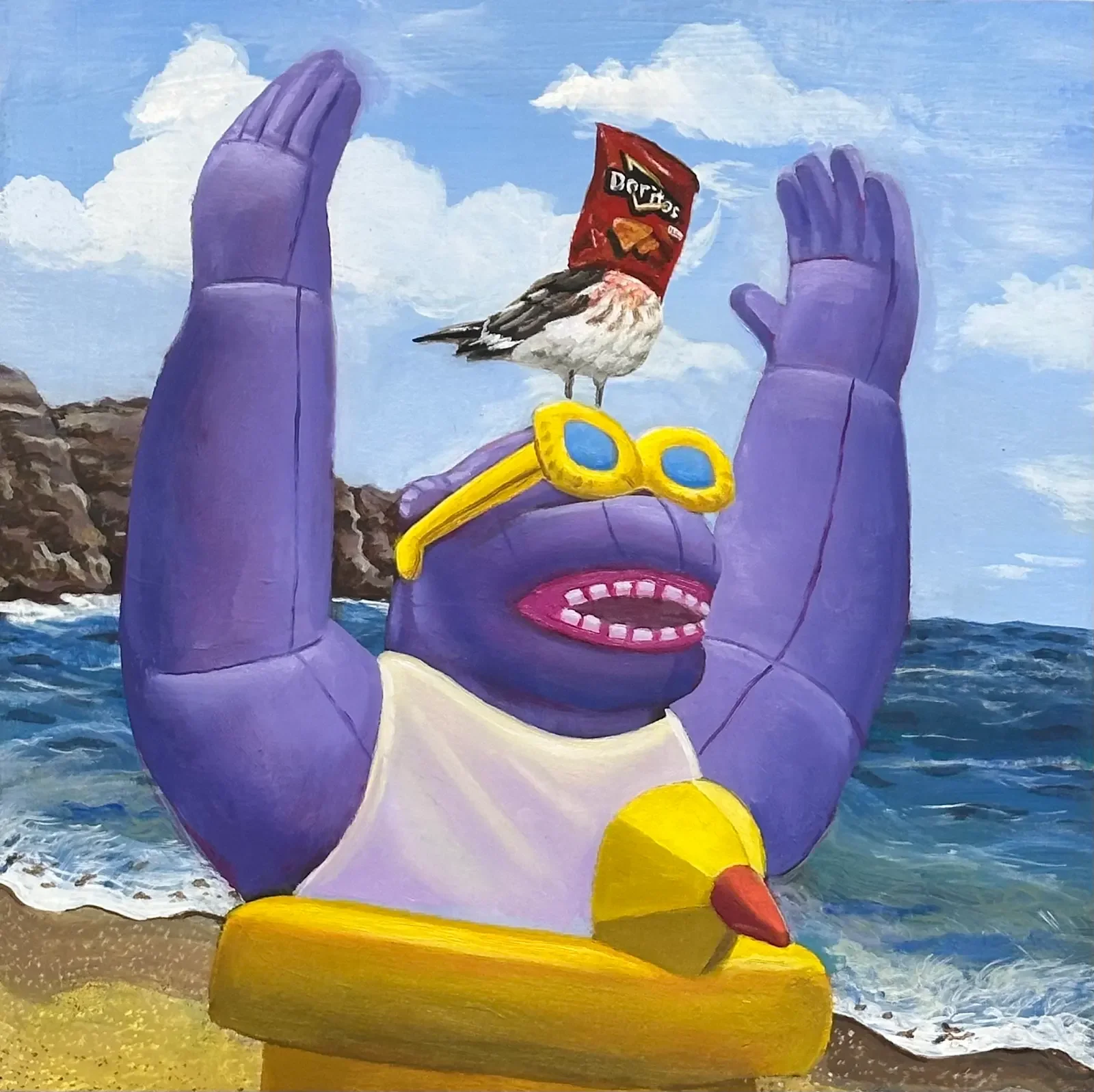
12 × 12 inch painting acrylic and oil on wood panel
Jesus Lopez: The ocean is essentially the lifeline to the planet and every ecosystem inhabiting Earth. Not only do they produce around half of the world’s oxygen, but they’re an integral part of absorbing heat trapped by greenhouse gases. I hope for a future that relies less on extraction and focuses on a stewardship that prioritizes the health of our aquaculture. As an artist that works with plastic I often think about human reliance on the material, and how little the average person considers the shelf life of non-recyclables. We should take a moment to consider our consumption of these single-use products and how they not only impact our future, but the overall well-being of other life inhabiting this planet too.
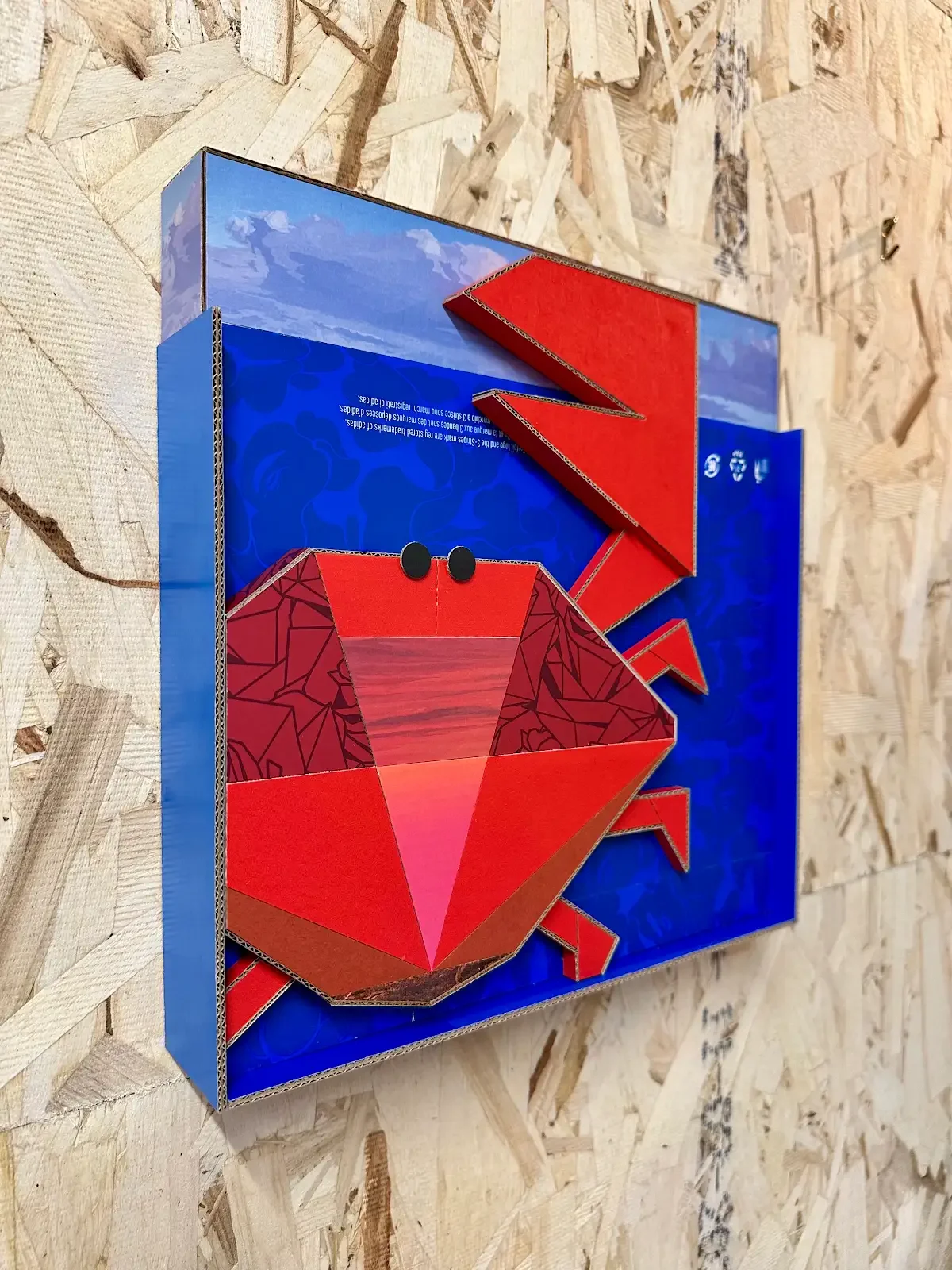
12 × 12 × 2 inch Mixed Media: recycled shoeboxes, recycled plywood scraps, on wood canvas
Kerry Sutton: As I formed together each piece of hand-cut recycled shoebox, I sought to conjure a bold and emotive interpretation of our relationship with the ocean, consumption and how they both interplay to create a sustainable future. We owe the ocean an interrogation of our ideas, behavior, what and how we consume, and the impact therein. As the power and fragility of the ocean cries out for our thoughtful and intentional response, I created this piece to highlight this delicate interplay and the power we have to sustain. With intention, thought, and creativity, we can amalgamate the everyday, easily discarded items of our lives (such as shoeboxes and wood scraps) into vessels of sustainability.
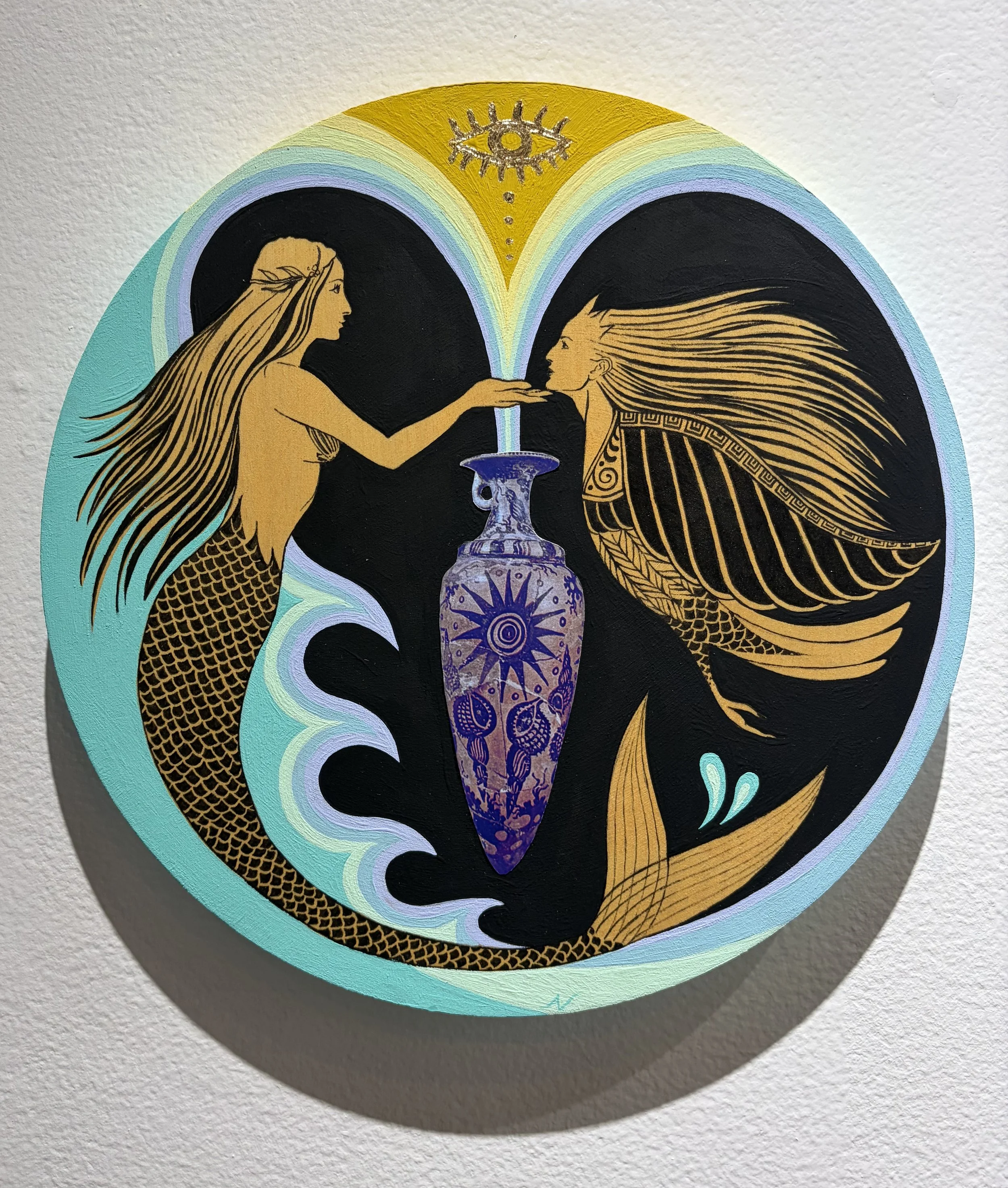
12 × 12 inches mixed media (acryl gouache, pen, collage, (faux) gold leaf)
Nase: What Does The Ocean Give Us?
Curatorial question: What does the ocean give us?
To me, the ocean is more than a place—it is a mirror. It invites us to slow down, look inward, and reconnect with the parts of ourselves that are often quieted by the pace of everyday life. Inspired by my Greek heritage and the mythology that has shaped it, this piece explores the sea as a space where memory, intuition, and story converge.
The Siren and the Mermaid represent the moment one part of ourselves recognizes another. Between them, an ancient vessel symbolizes the stories we inherit and the wisdom we carry forward, while the sea itself becomes a metaphor for the depths within. More than beauty, mystery, or wonder, the ocean offers us perspective. It reminds us that we are shaped not only by the waters we cross, but by the stories we carry—and that sometimes the deepest truths are found not by looking farther outward, but by looking within.
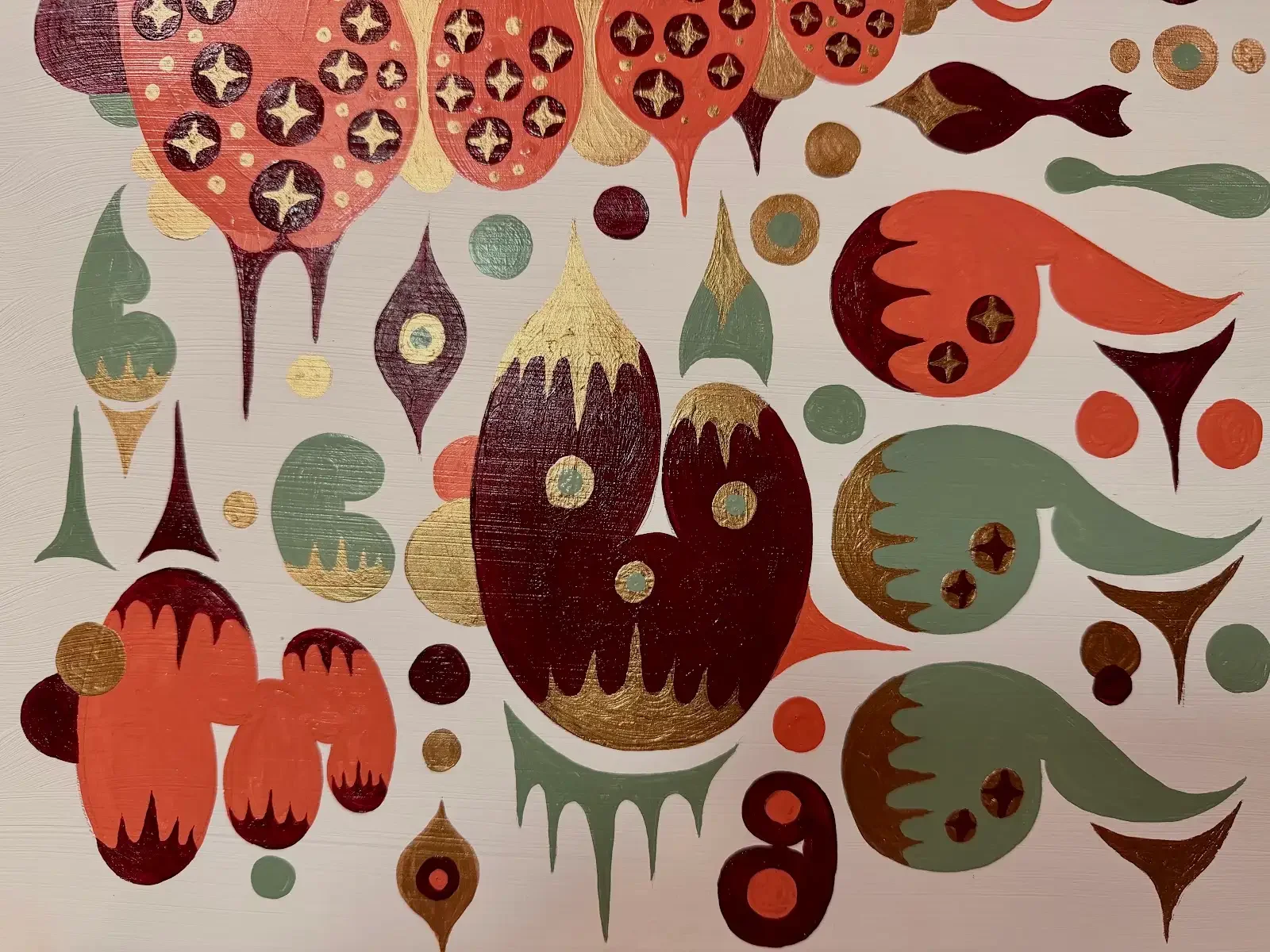
12 × 12 × ½ inch painting Spray cans with stencil on plywood
The ocean created the life and everything we see in this world. It keeps us alive and gives us the reason the life is important. We owe the ocean keeping it clean and beautiful. We should appreciate more that we share life and grow together. If we can't keep it clean we won't be able to survive so more people should care about the nature even it's a little help and support like this art show.
A lot of artists including myself also use the sea creatures as art pieces. They are so intimidating and amazing animals. For this year, the ocean and those animals gave me great opportunities. It might take a long time to say thank you to this massive nature but it is my time to show them much respect and appreciation.
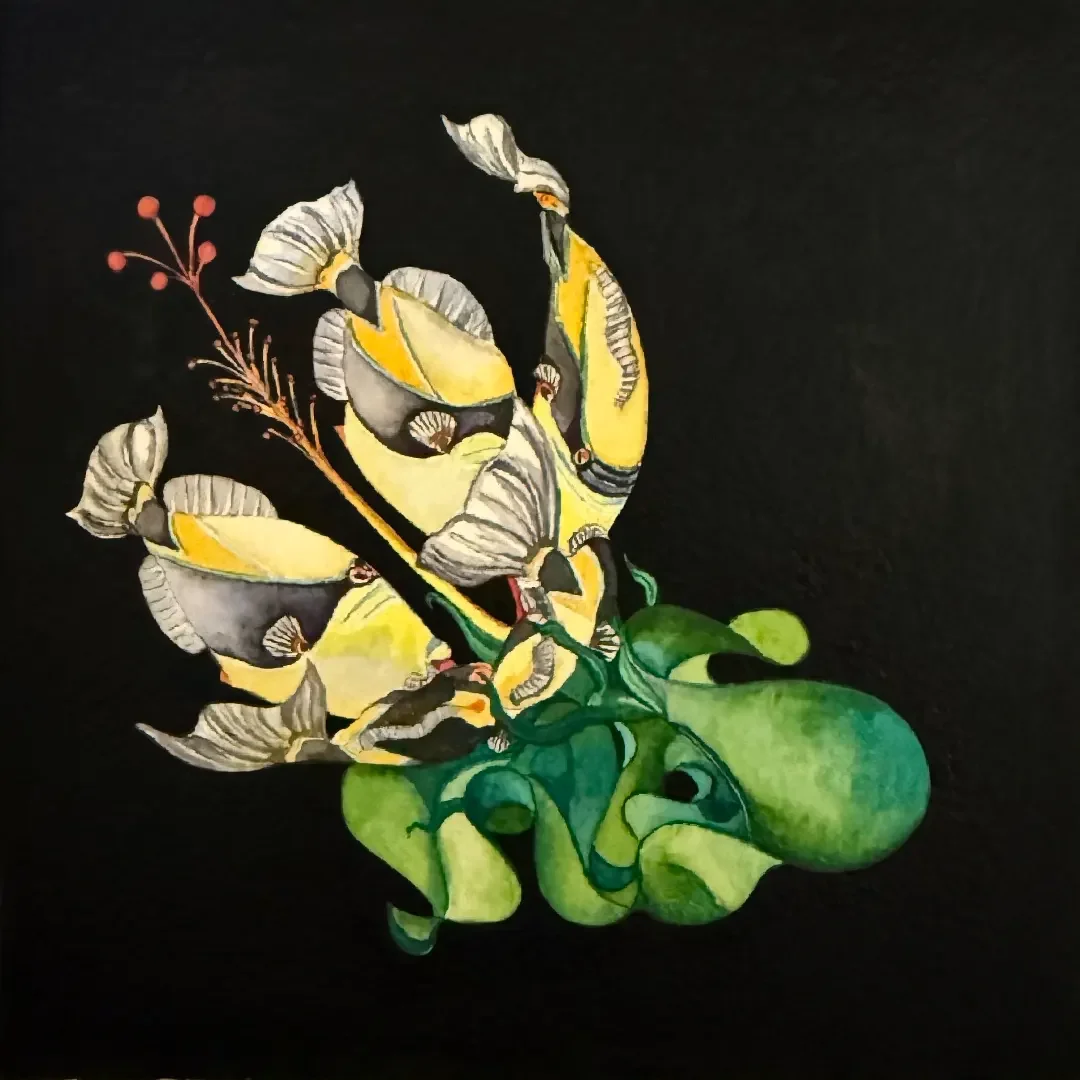
11 × 11 inch watercolor and Ink on paper framed
The ocean is the foundation of life on Earth. It provides us with the air we breathe, the food we eat, the water cycle that sustains our ecosystems, and a stable climate that makes our planet habitable. More than half of the oxygen we breathe is produced by marine plants, while millions of people around the world depend on the ocean for their livelihoods through fishing, tourism, transportation, and trade. Beyond its physical resources, the ocean also offers beauty, inspiration, recreation, and a sense of connection with nature. Its vastness reminds us of both the power and the fragility of our planet.
When I imagine the future of our oceans, I hope to see healthy, thriving ecosystems filled with vibrant coral reefs, abundant marine life, and clean waters free from pollution. This future is possible only if we make responsible choices today. Climate change, plastic waste, overfishing, and habitat destruction have placed enormous pressure on marine ecosystems. However, growing awareness, scientific innovation, conservation efforts, and sustainable practices give hope that we can reverse much of the damage. Governments, businesses, communities, and individuals all have a role to play in protecting the oceans. By reducing pollution, supporting sustainable fishing, conserving marine habitats, and lowering carbon emissions, we can ensure that future generations inherit oceans that are as rich and life-giving as they have been for thousands of years.
The ocean has shaped humanity in countless ways. It has connected civilizations through exploration and trade, inspired art, literature, and scientific discovery, and provided countless opportunities for learning and adventure. Even for those who may not live near the coast, the ocean influences daily life through the weather, the climate, and the natural systems that sustain agriculture and freshwater supplies. Its rhythms teach us patience, resilience, and respect for the natural world. Watching the waves or listening to the sound of the sea often reminds us of the importance of balance and harmony between people and nature.
Because life began in the ocean and it continues to sustain all life on Earth, we owe the ocean our respect, gratitude, and protection. It is our responsibility to restore and preserve its ecosystems so that they continue to support biodiversity and human well-being. Every action, whether reducing plastic use, participating in beach cleanups, conserving water, or advocating for stronger environmental policies, contributes to the health of our oceans. Protecting marine ecosystems is not simply about saving sea life; it is about safeguarding our own future.
The ocean has given humanity far more than we can ever repay. It nourishes us, regulates our climate, and supports countless forms of life. By caring for it today, we ensure that generations after us will inherit a healthier planet where the oceans continue to thrive. Restoring and sustaining marine ecosystems is not just an environmental responsibility—it is a commitment to preserving the very source of life itself.
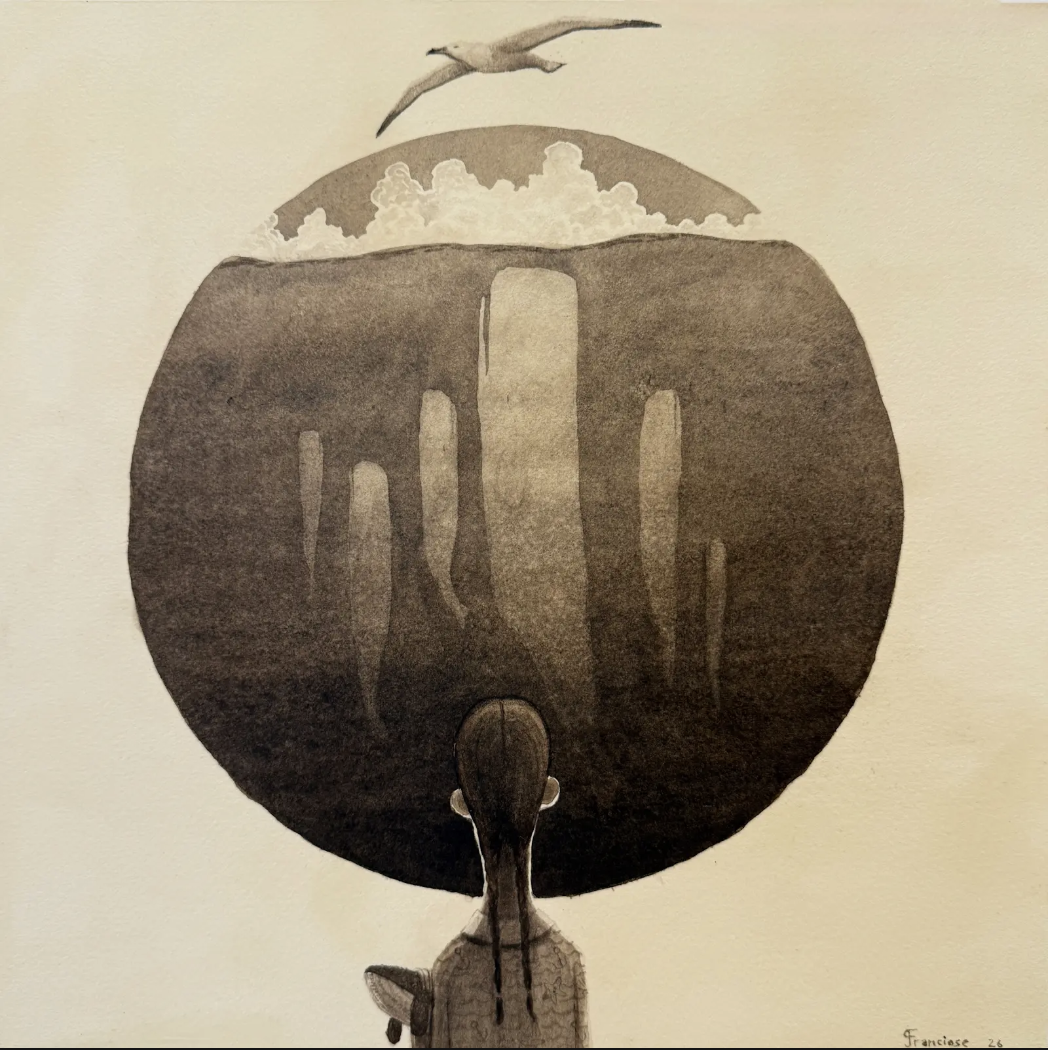
12 × 12 × 1.5 inch watercolor painting on panel mounted cotton rag
Graham Franciose: The ocean gives us an enormous source of wonder and awe. We know so little of the underwater world that covers over 70% of our planet. There are so many magical things happening below the surface that most of us will never experience, like the way giant Sperm Whales sleep hanging vertically, suspended just below the surface, which was only discovered 22 years ago. Above the surface, another unbelievable phenomenon, the Albatross, which spends 85% of its life at sea, can also sleep while flying. Both of these animals utilize "unihemispheric slow-wave sleep," which allows one half of their brain to sleep while the other remains awake. Who knows what else will be discovered in years to come.
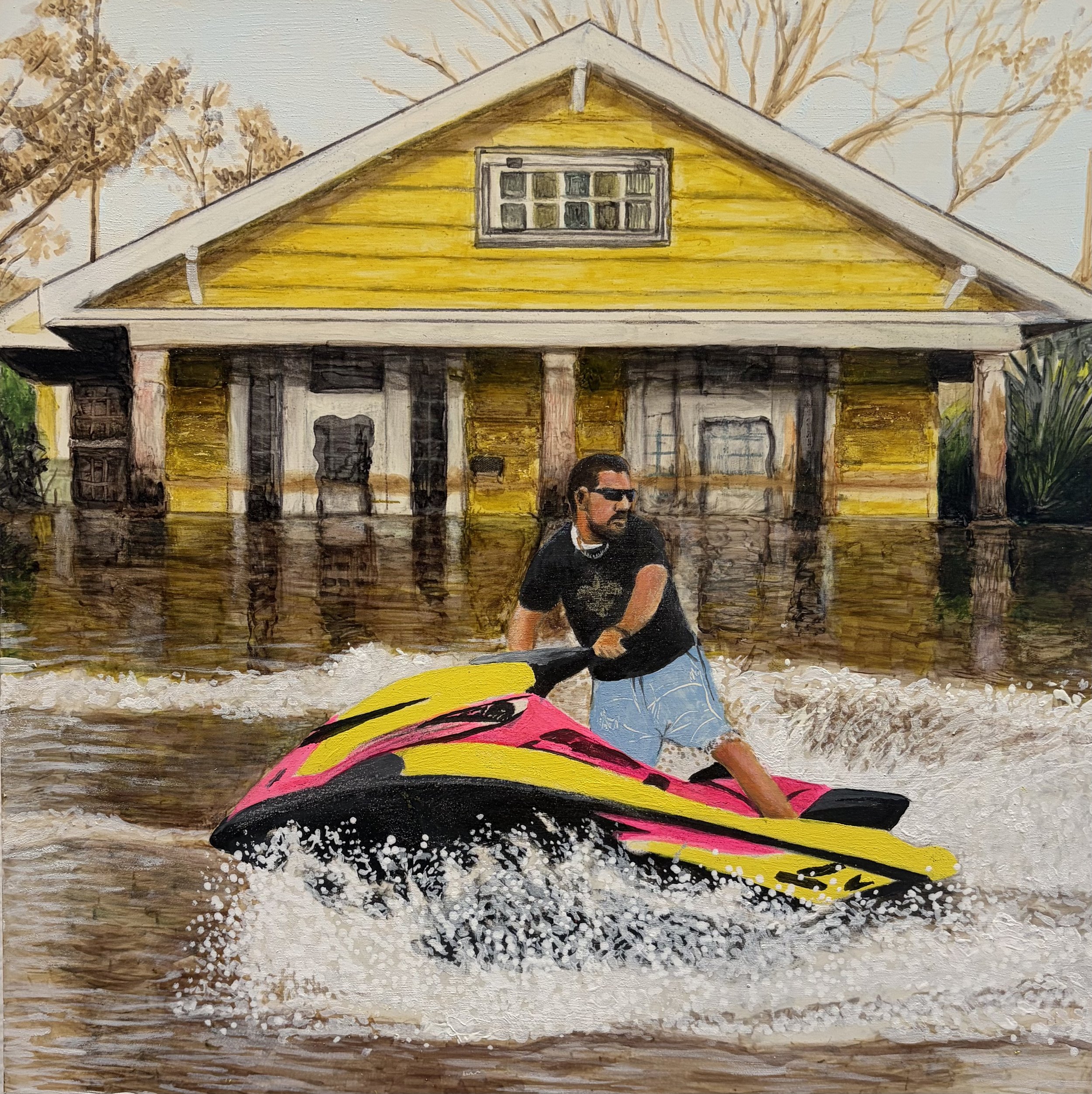
12 × 12 × 2 inch Mixed media- color pencil, acrylic on cradled panel.
Craig Cundiff: In 2006, Hurricane Katrina ravaged my hometown of Chalmette, Louisiana. Witnessing the power of the sea wipe all of my childhood memories off the map was life changing. One of the biggest lessons I carry with me today was molded by seeing how people across an entire community handle grief differently. The altruistic and the schemers. The affected and the effective. This piece honors the people of Chalmette using whatever they had, in this case a Sea Doo, to search for their neighbors in the aftermath of the storm.
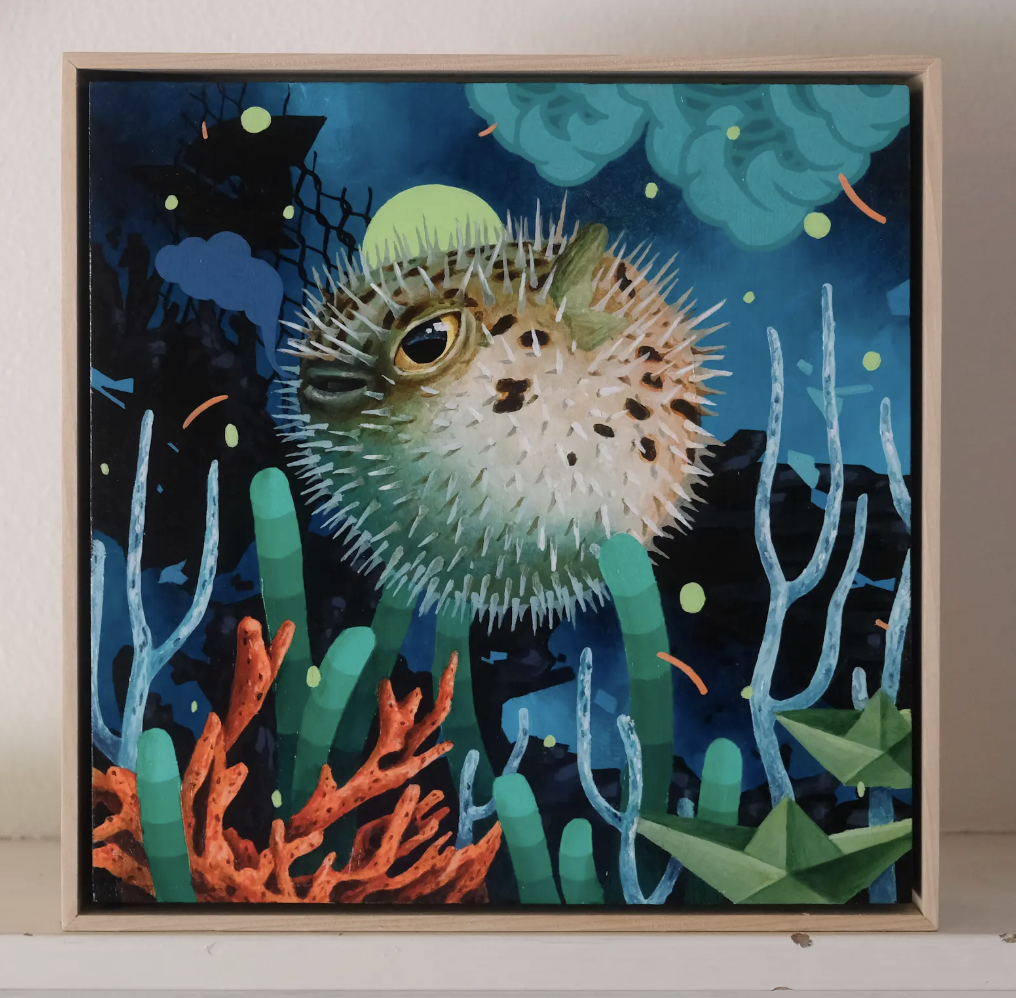
12 × 12 inch painting acrylic on canvas framed
Jeremy Nichols: The ocean gives us all life. It's an incredible universe within our own planet that we have yet to fully understand let alone explore. And unfortunately at our current pace, the future is not looking so bright. Growing up in Ohio, I did not have much access to the ocean. My first experience snorkeling was in Okinawa when I was visiting my family, it changed everything for me. It was my first time seeing a coral reef and a puffer fish, still one of the most amazing moments that I'll never forget. That day forward, the ocean had a profound influence on my art work and still plays a huge role. We owe the oceans everything, at the very least we can start showing it some respect.
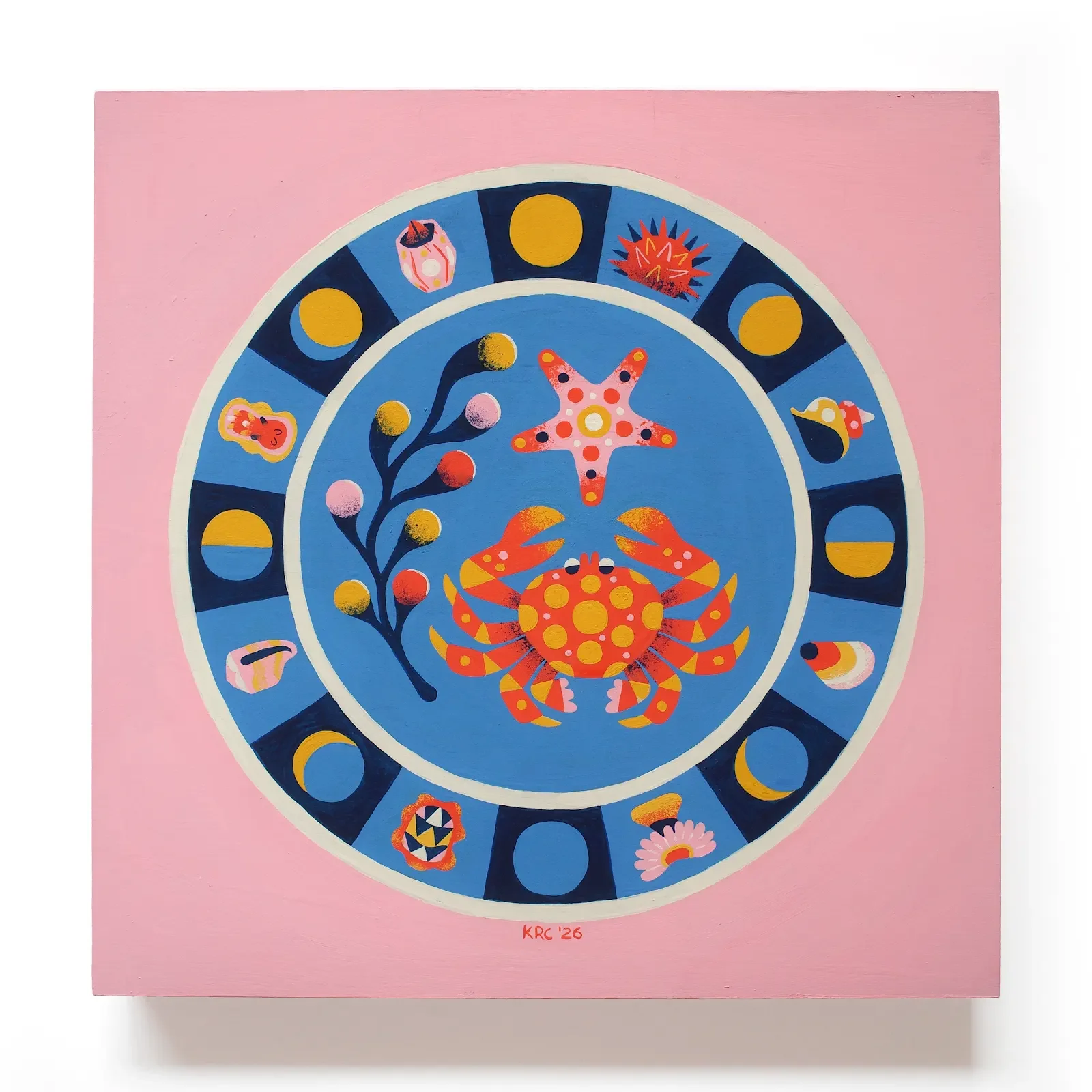
12 × 12 × 1.5 inches Gouache painting on wood panel
Kenichiro Chaffee: There are few better feelings than walking along the beach and stumbling upon tide pools. A true gift from the ocean, tide pools give us a glimpse of utopia. Despite a harsh and constantly changing environment from the moon’s gravitational pull, each pool creates a tiny jewel box of diverse characters with their own specialized functions and skillsets. These microcommunities support each other, provide housing for one another, and operate in harmony with one another.
Imagine if us humans spent our time (and tax dollars) building communities that were as diverse, beautiful, and functional as tide pools. In the US, we constantly build massive suburban sprawls without adequate housing, public transportation, or access to fresh food. If instead we operated more like a tidepool, where we value our neighbors, our community, and our relationship to nature, we could really thrive.
There are lessons to learn within the cyclical nature of tidepools as well. The ebb and flow of the tides are out of the pool’s inhabitants control, they must simply react and adapt. There are times for feeding and exploring and there is a time to slow down and rest. The tide cycle is like our seasons on hyperdrive. In our late stage capitalistic societies, we often forget to slow down, to rest, to take time to look inward. We are encouraged to keep working, keep consuming, and keep grinding. However, much like how a barnacle shuts its doors to the outside world when the tide recedes, we also need to make time for ourselves to rest and recharge during the darker, colder months of our year.
Ultimately tidepools give us a place to reflect on the power of community. There is no individualism in tidepools. There is no every man for themselves mentality. It is everyone working together to create harmony in a chaotic and ever-changing world.

12 × 12 × 2 inch acrylic painting on panel
Mary Iverson: Everything we do ends up in the ocean.
Around Seattle, you can find storm drains stenciled with the words “Drains to Sound” and an image of a fish. I have always loved those stencils. They are a great example of how individual actions can make a small difference.
But really, honestly, although it would be great to turn this situation around through small interventions like storm drain stencils, the reality is that we live within a well-established industrial system that is almost impossible to stop.
So what do we owe the ocean? Vote for leaders who support environmental protection. Support organizations that push for change through the legal system. Contribute to associations, like PangeaSeed, that work to educate our communities.
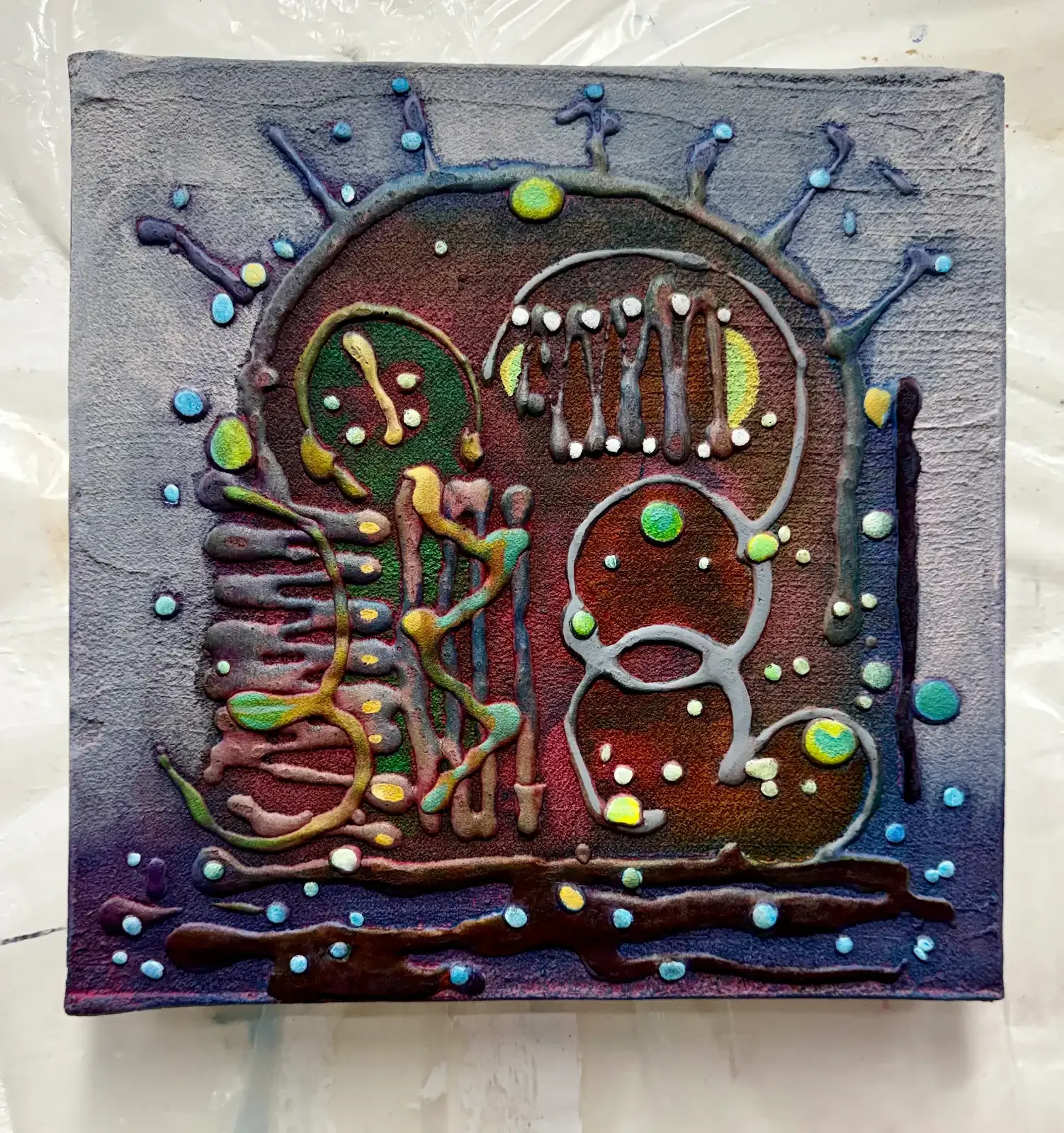
12 × 12 × 2 in painting Concrete patch and acrylic paint over panel
I remember going to Zuma beach when i was a child. There were jellyfish on the sand, glistening and jiggling. I looked at them for a long time. Then i jumped back into the ocean. I was afraid of the power of the water, but braved it anyhow. I gathered my sand to build a castle and forgot about the water’s power.
It don’t need to write anymote. Just an idea. Bye bye bye bye bye bye bye bye bye bye bye bye bye bye bye bye bye bye bye bye bye bye bye. Okay okay okay okay okay okay okay okay. Blah blah blah blah blah blah blah blah blah blah blah blah blah
It don’t need to write anymote. Just an idea. Bye bye bye bye bye bye bye bye bye bye bye bye bye bye bye bye bye bye bye bye bye bye bye. Okay okay okay okay okay okay okay okay. Blah blah blah blah blah blah blah blah blah blah blah blah blah
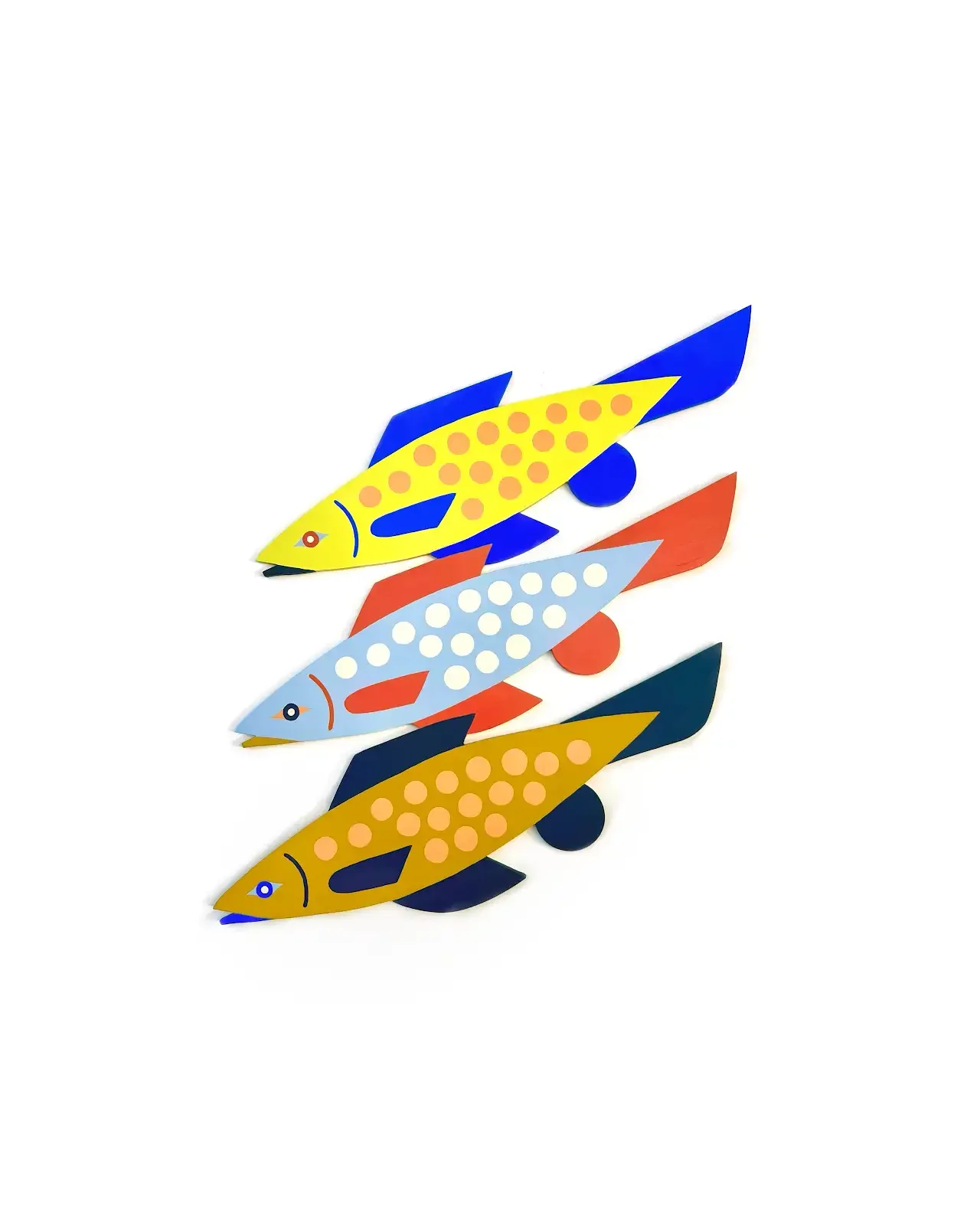
13 × 18 inch painting Acrylic on hand shaped wood
This piece depicts three salmon shimmering in the changing light, fin to fin swimming against the current. Every year in the Pacific Northwest thousands of salmon 'run' thick through the surrounding waters, pressing against one another, splashing across shallow streams, and returning to spawn at the place of their birth. Titled 'Spotted Belly' it connects the three creatures as a singular unit nearing the end of their lifelong journey. In the future of our oceans, I hope to see plentiful salmon runs summer after summer in my hometown Seattle, WA.
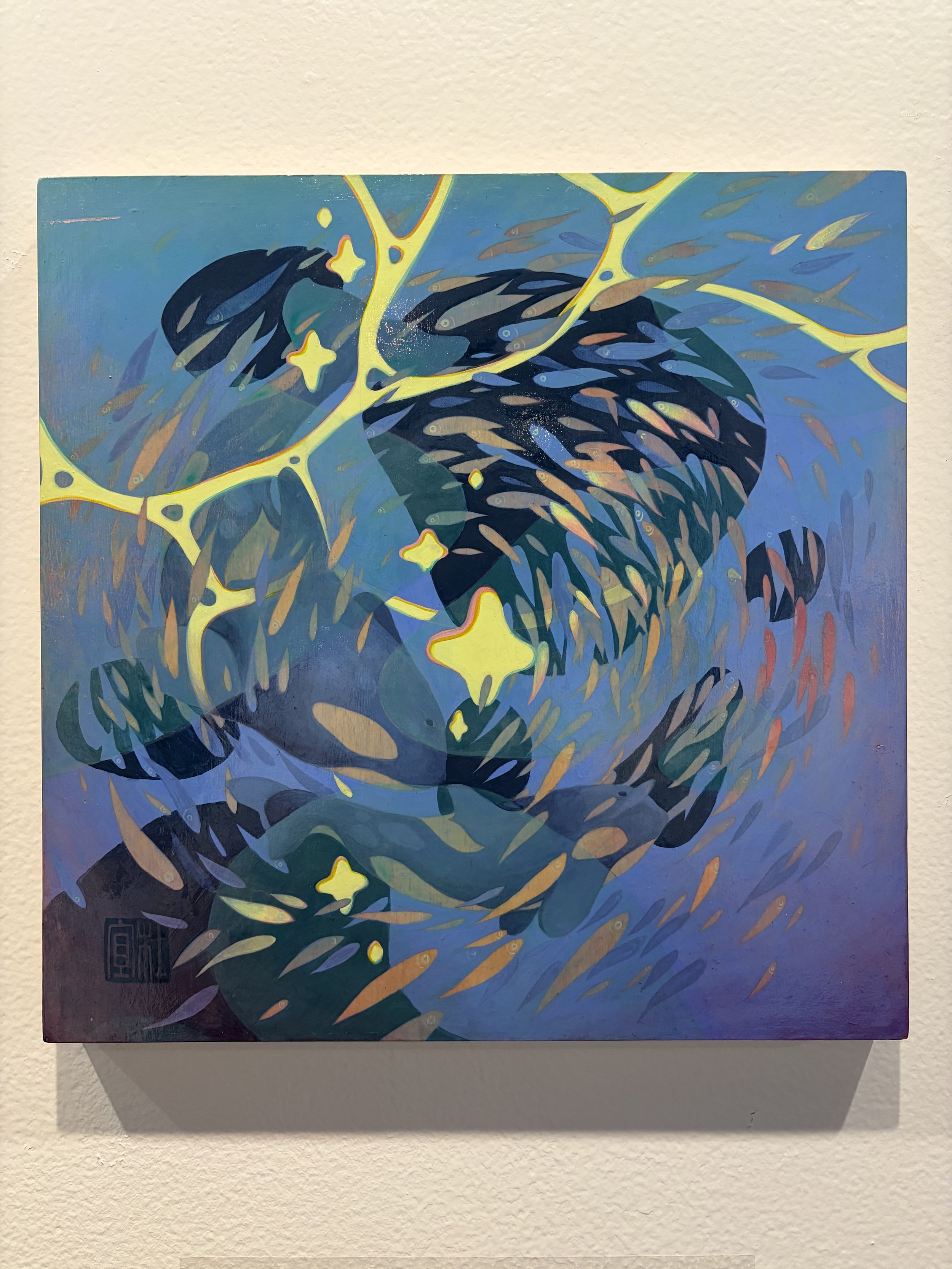
12 × 12 inch painting acrylic on cradled panel
This painting was inspired by our Southern Resident Orcas, especially Tahlequah who was in the news in 2018, when her orca emotional response seemed so human and maternal, garnering public attention, and highlighting the urgency of ocean conservation in the Salish Sea.
Unlike transient orcas that hunt marine mammals, Southern Residents mainly eat Chinook salmon, adults need 100 to 300 pounds of fish daily. Because their preferred food source has faced threats of habit loss since the late 1800s, these orcas are highly vulnerable, prompting ongoing conservation efforts. Visit orca.wa.gov to learn more about orcas, salmon, and actions to support their conservation.
The ocean is a source of inspiration as her stories reflect some of our own. Participating in nature’s cycles in a healthier, more balanced, and reciprocal way will better support healthy oceans and shared prosperity in the long term.
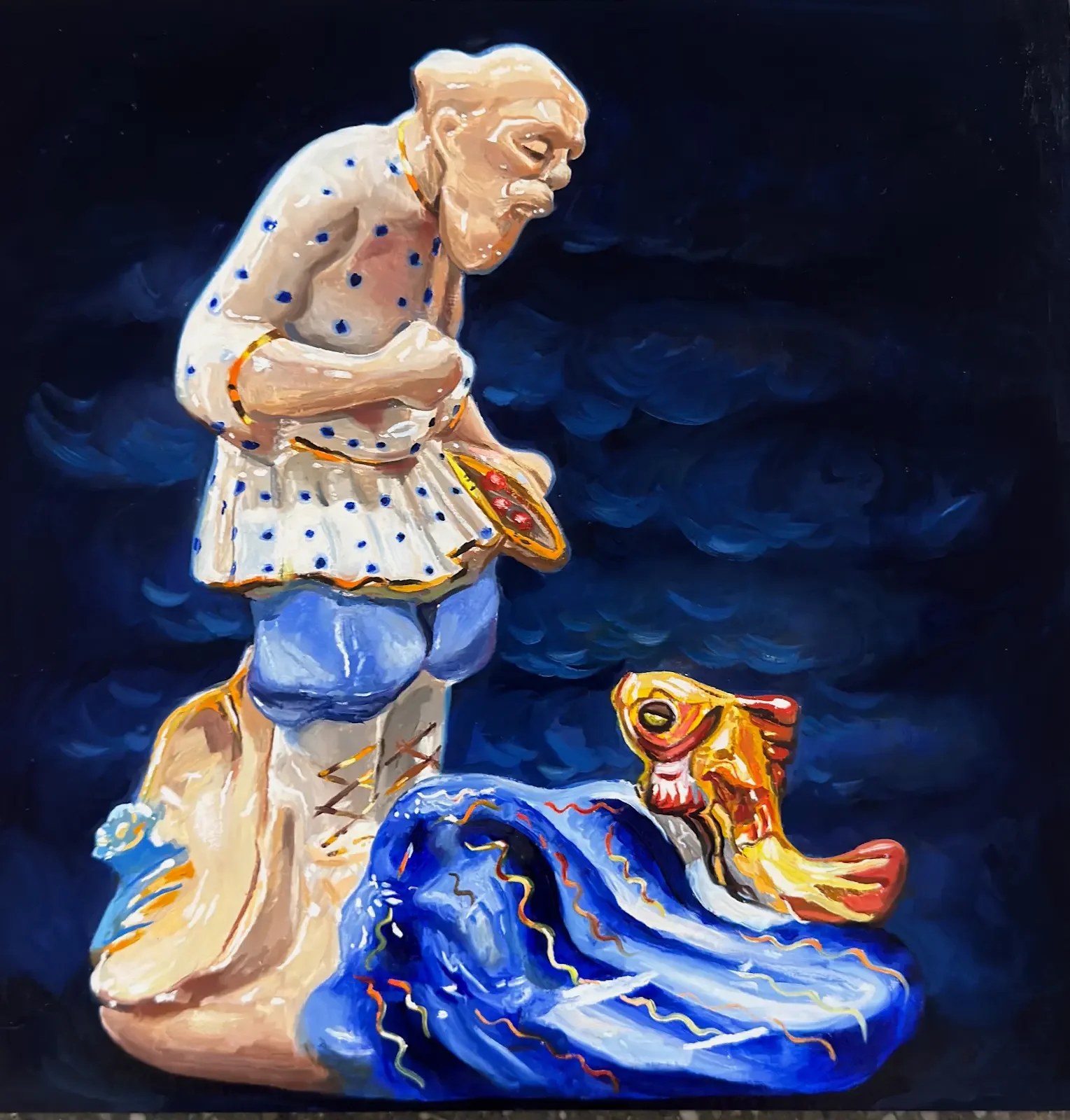
12 × 12 inch oil painting on wood panel
Erica Rose Levine: Growing up in Rockaway we would spend every summer day at the beach. The ocean was a source of inspiration, reminding me of the beauty, strength, and wonder of nature. Beyond its beauty, the ocean gives us life by producing much of the oxygen we breathe, providing food for billions of people, and helping regulate Earth's climate. Protecting the ocean means protecting our planet's greatest source of life. We owe it to ourselves and all of the animals to make sure to take better care of the ocean.
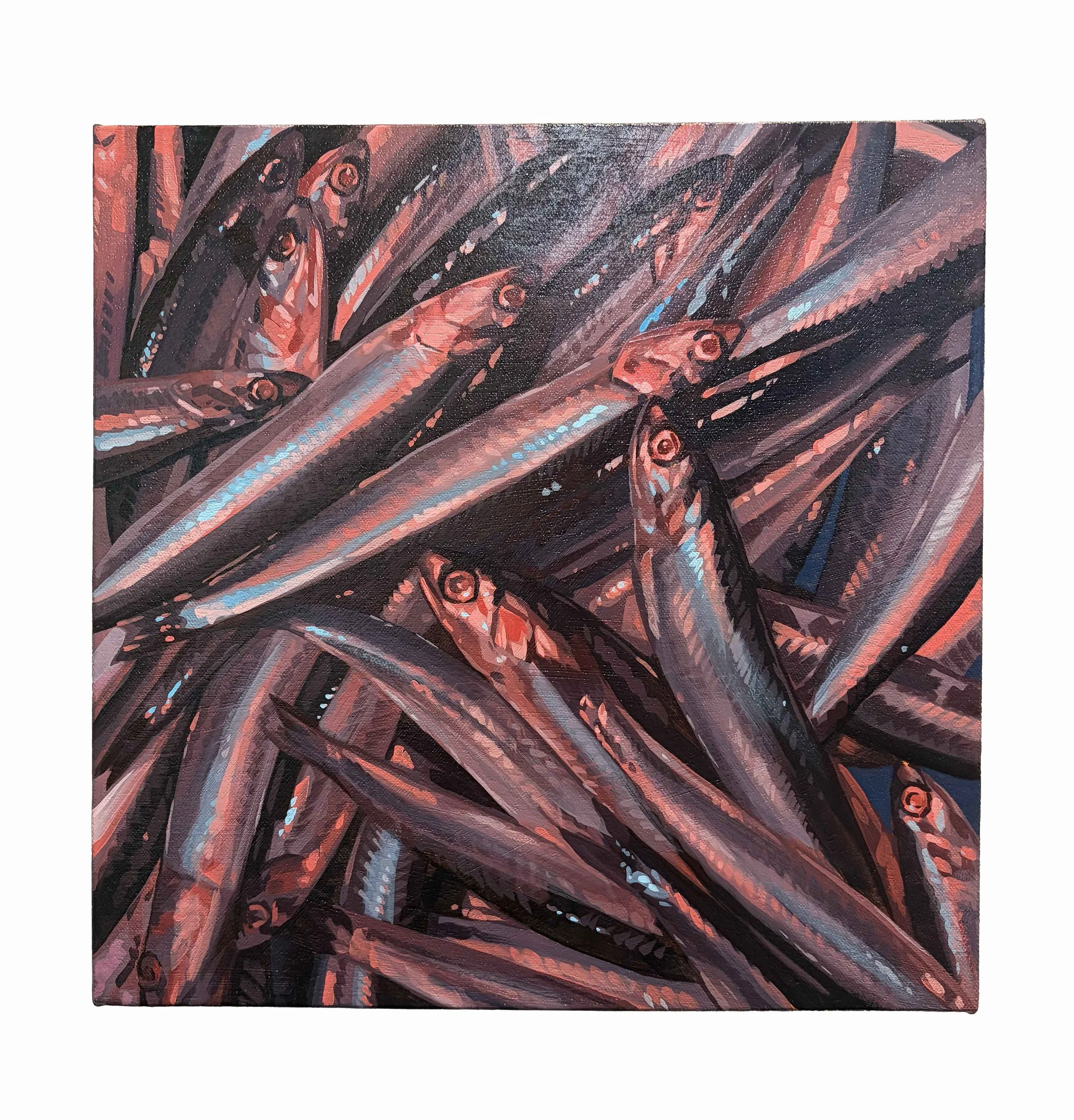
12 × 12 × 2 inch painting acrylic on canvas
David Rice: Our ocean is a bountiful resource for all living creatures. While it provides so much for us, overfishing can cause great harm. Overfishing empties the sea faster than fish can breed. Removing single species breaks the natural chain of predators and prey, harming the entire ocean environment. Additionally, many commercial fishing vessels use nets and trawling equipment which can be very harmful to the habitat. It is important for us to practice sustainable fishing to protect marine life, prevent habitat damage, and keep the ocean balanced. A healthy ocean leads to a healthy planet.
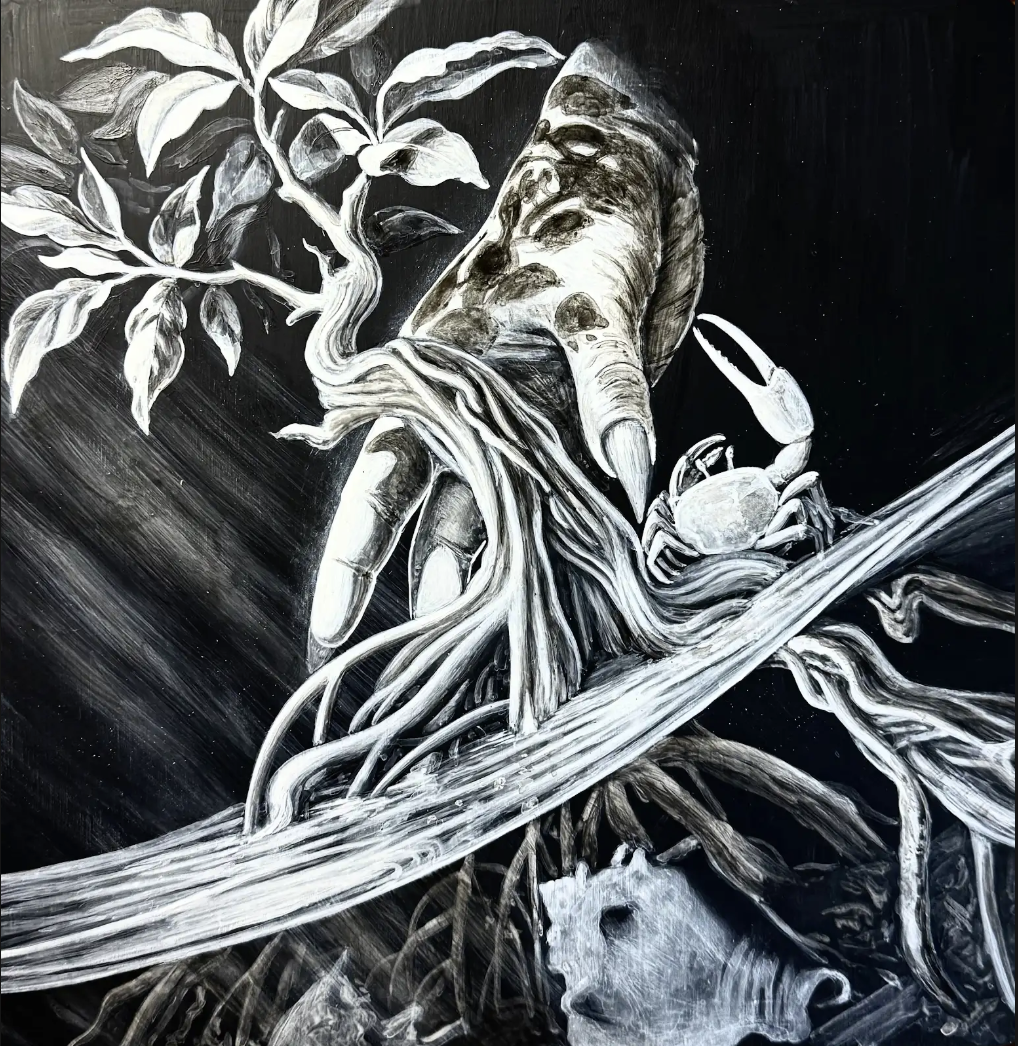
12 × 12 inch acrylic painting on routed panel
Jeff Sheridan: I grew up in South Florida on boats and underwater. Long before I understood ecology or climate change, I learned that the ocean wasn’t a backdrop. It was home. It gave me wonder, perspective, and an early understanding that life exists in relationships rather than in isolation. Mangroves were always there, quietly holding everything together.
As I’ve gotten older, I’ve realized how easy it is to mistake something resilient for something permanent. We build over it, pollute it, and expect it to keep absorbing the cost. This painting imagines the mangroves as a human hand because I don’t believe nature begins where we end. The line between caring for the ocean and caring for ourselves is much thinner than we like to believe.
If we owe the ocean anything, it’s humility. We should leave it with the same sense of gratitude and responsibility that we bring to the people and places that raised us. Every act of care is, in the end, an act of self preservation.
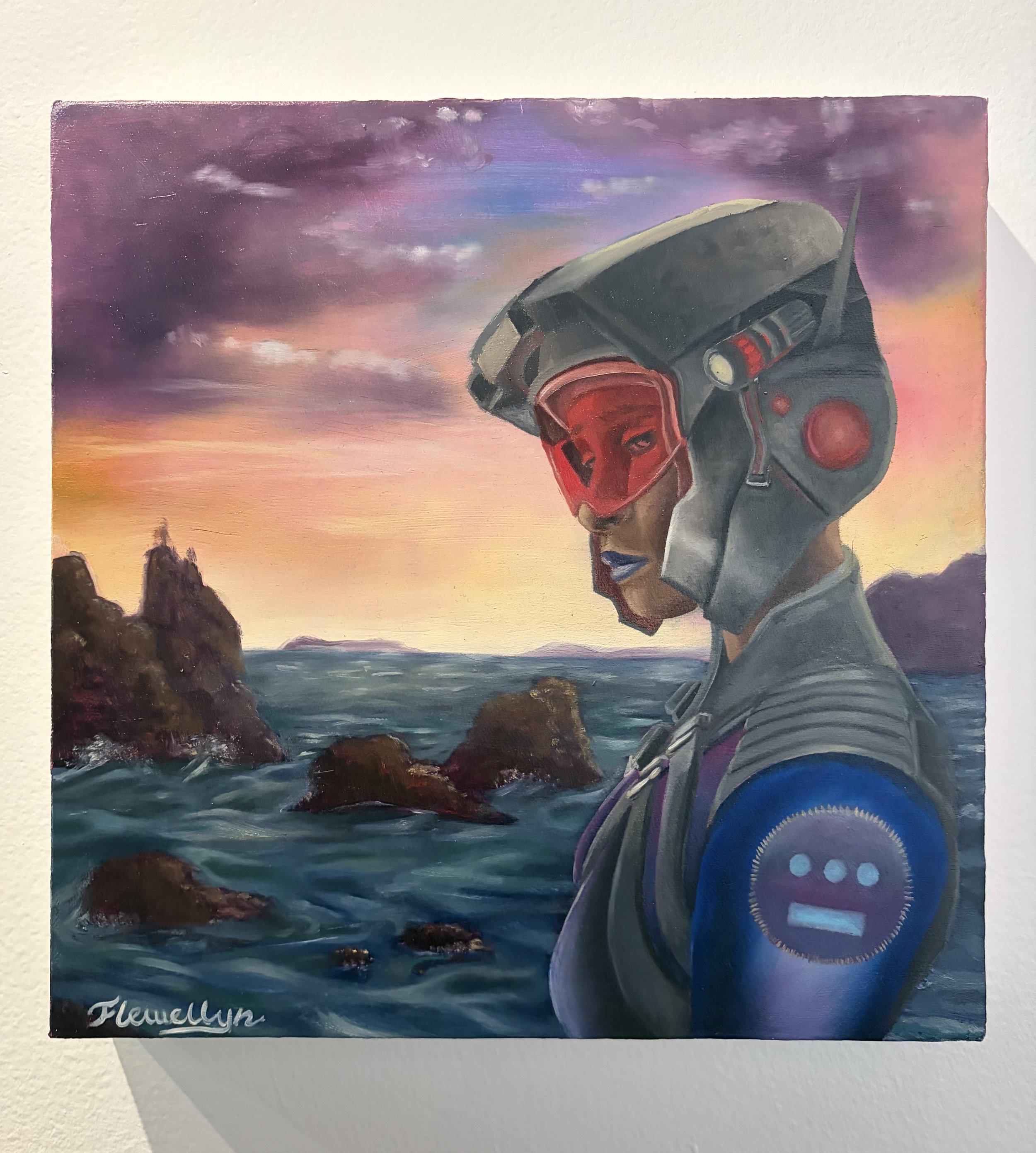
12 × 12 × 1.5 inch oil painting on canvas
Ken Flewellyn: In the long run the ocean will always maintain it's majesty. Even in the turmoil that it currently faces, there are things eternal that will stand the tests of time. I dream of future civilizations exploring, observing the impact of actions/inaction, and learning the mysteries that we have yet to discover. As we know evolution will find a way to will adapt to changes whether that means water temperature, acidity or food scarcity. The ocean is resilient. Hopefully future residents will better understand how to care for it.
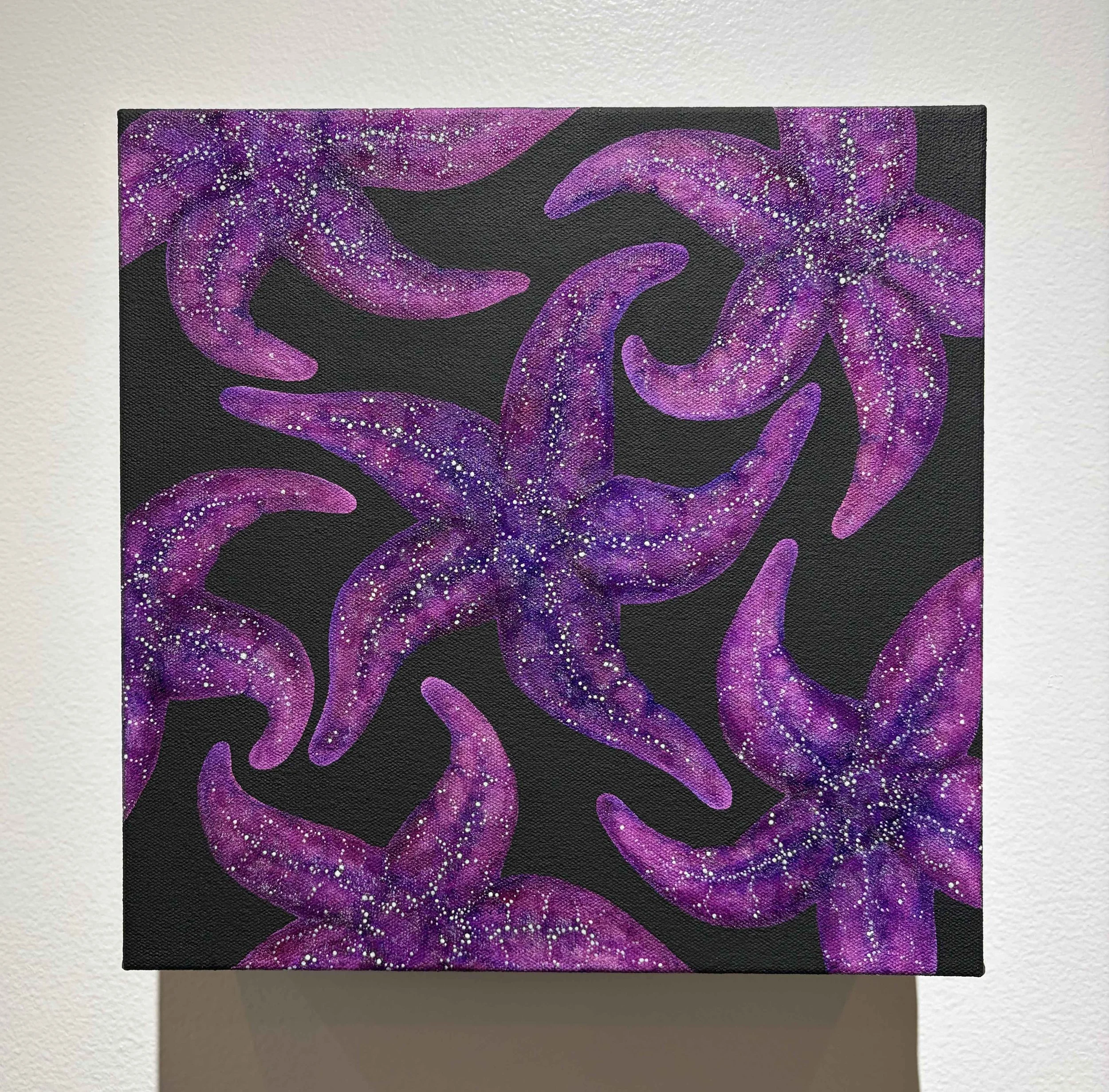
12 × 12 × 4.5 inch Acrylic, soft pastel, raw canvas, artist made stretcher bars
Kwonny: I first saw ochre sea stars during very low tide in West Seattle. Dozens of plump glistening stars - startlingly purple and sometimes orange - clung onto each other and under the barnacled rocks, their five arms stretching and contorting like rock climbers navigating the most precarious angles. It had been two years since we moved to Washington from across the Pacific and moments like this were beginning to foster a feeling of belonging. Exploring this part of our neighborhood that is normally hidden underwater felt like I was being given a secret to hold. As a new friend and I gingerly stepped across pools of ocean water, I was beginning to build the experiences that would make me feel like a true resident of the PNW. Ten years ago there might have been a lone purple starfish in these same waters, as their population was being decimated by a bacterial disease. They’ve since made a comeback but other starfish species are still struggling. Today when I walk by these same waters I’m reminded of that day and the comfort the ocean gave me. I hope for a future where the ocean is healthier than it is now, full of fish and life, where we give more than we take.
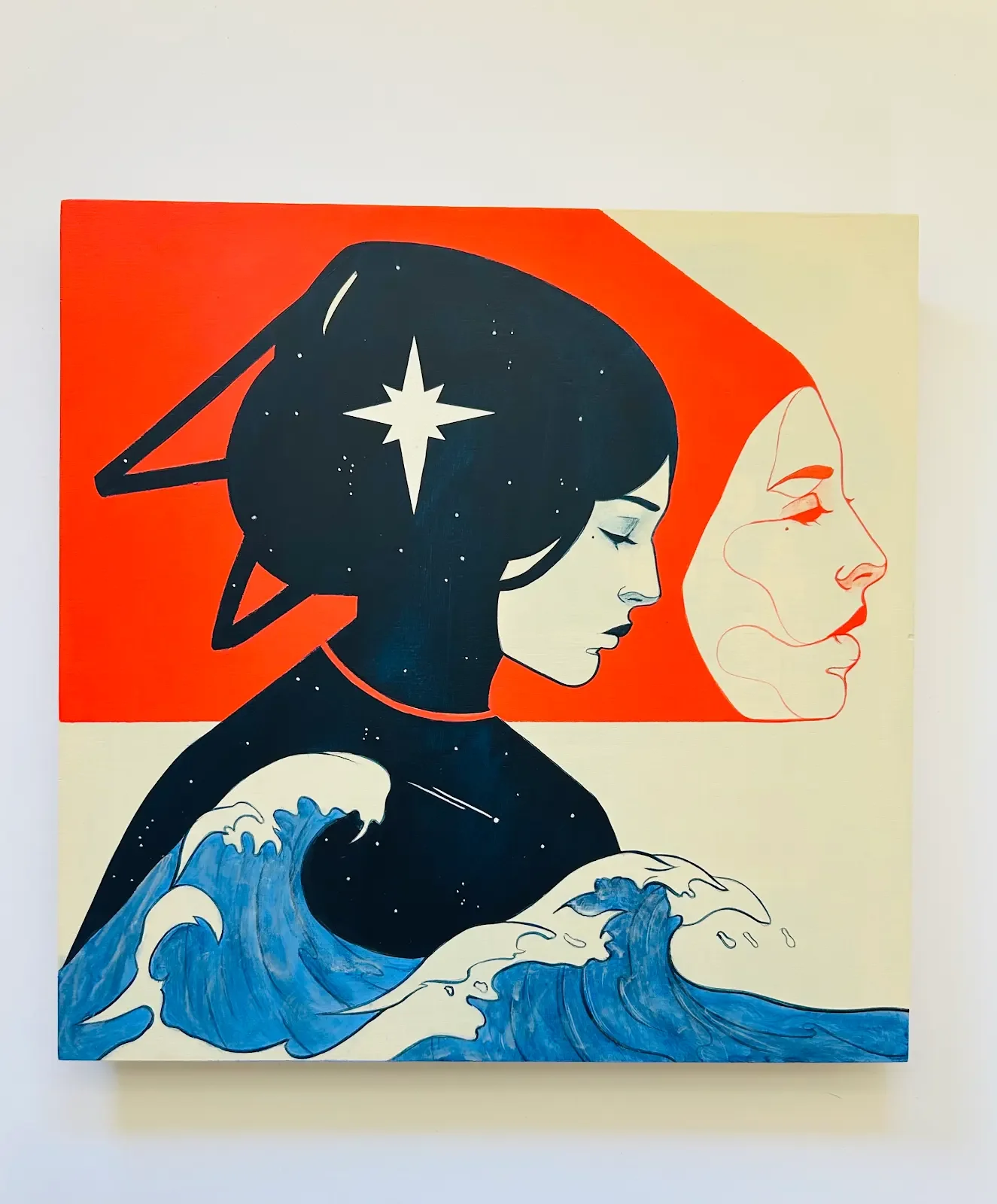
12 × 12 inch acrylic painting on canvas
Raymond Argumendo: When I was a child, my family and I took a trip to the beach where my mother taught me to respect the ocean and not go into the waves if they looked angry. Of course, I didn’t listen and jumped right in when the waves were crashing hard against the shore. Within moments, I was pulled under and slammed into the sand, feeling terrified and unsure if I would ever make it back to land. Thankfully, some strangers came to my rescue and helped pull me to safety. Ever since that day, I have respected the ocean and admired both its frightening power and its incredible beauty.
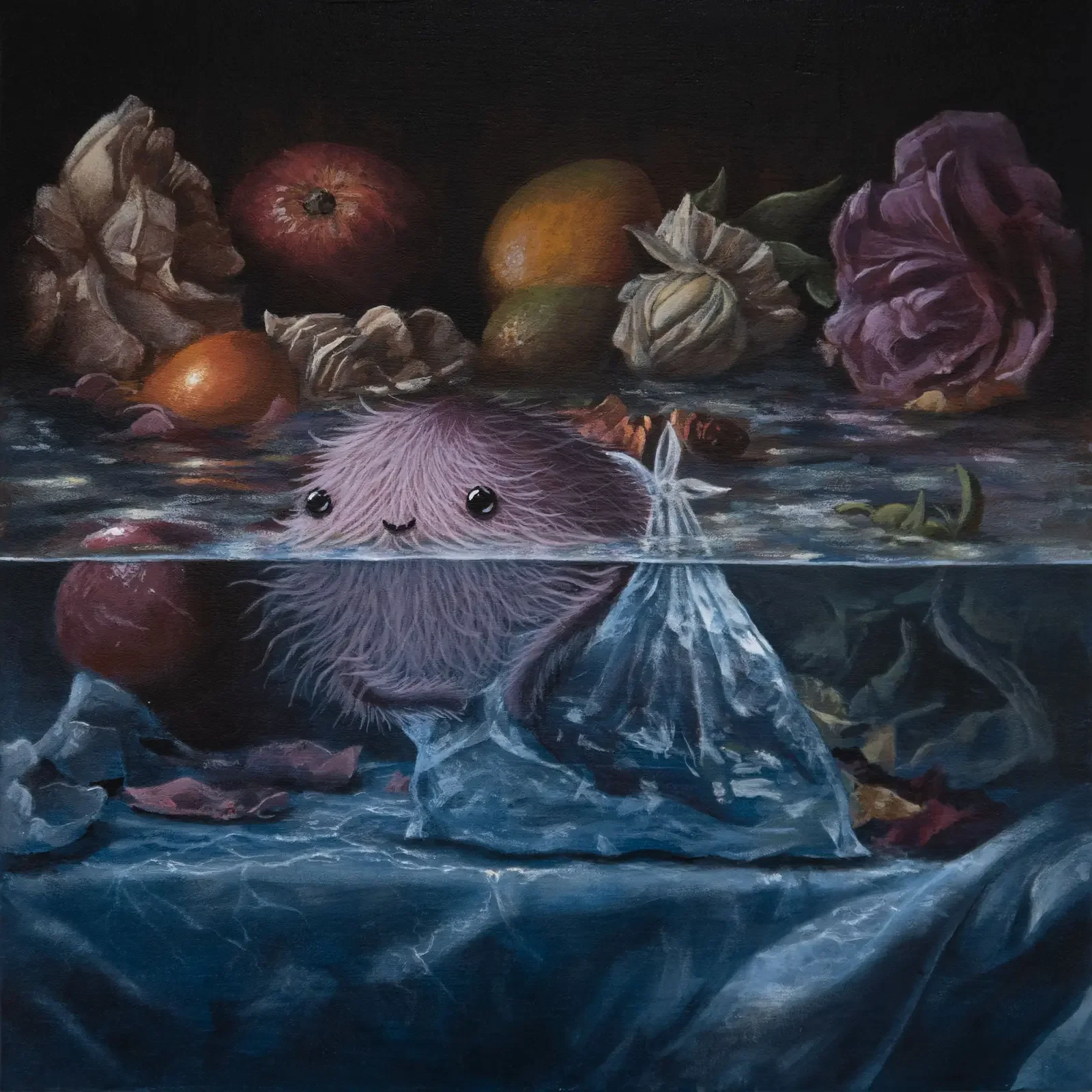
11.8 × 11.8 × 1.2 inch painting Acrylic paint on wood panel
My artwork, “The Monster Underwater” is about a monster that is, in reality, us. It represents all the waste that has gradually invaded our oceans. Meanwhile, the creatures that live beneath the surface continue with their lives, unaware of the uncertain future we are leaving them.
I believe we owe the ocean greater care. We should clean it whenever we can and, above all, stop polluting it. The ocean has given us life, food, balance, and beauty; the least we can do is protect it. I like to imagine a future where the blue of the sea remains a symbol of life and hope, rather than a reminder of the consequences of our actions. That future is still possible, but it depends on the choices we make today.
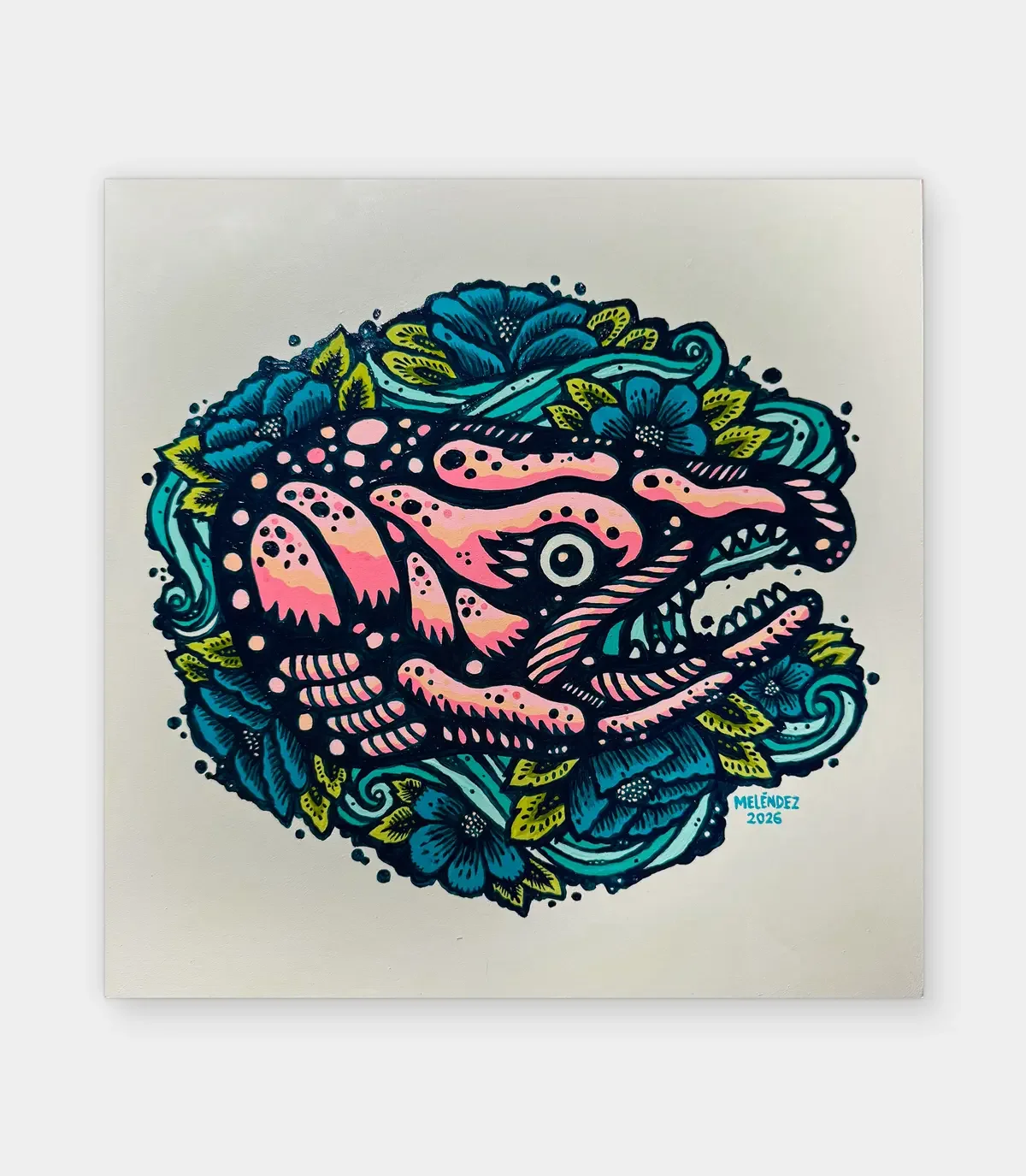
12 × 12 inch painting acrylic on wood panel
I was born in Mexico City and spent much of my childhood in Minatitlán, Veracruz, near the Coatzacoalcos River, before returning to Mexico City as a teenager. The river, which flows into the Gulf of Mexico, made water part of my early understanding of place and home. After settling in the Pacific Northwest, I found that connection again in Puget Sound and in the salmon and their long journeys through its waters. The fish in my work have become carriers of memory, migration, and endurance, linking the places that have shaped me. The ocean has taught me to understand home not as something fixed, but as places and experiences joined by currents. It reminds me that distance does not erase our origins and that the waters we live beside become part of who we are.
PANGEASEED FRAMED PRINTS
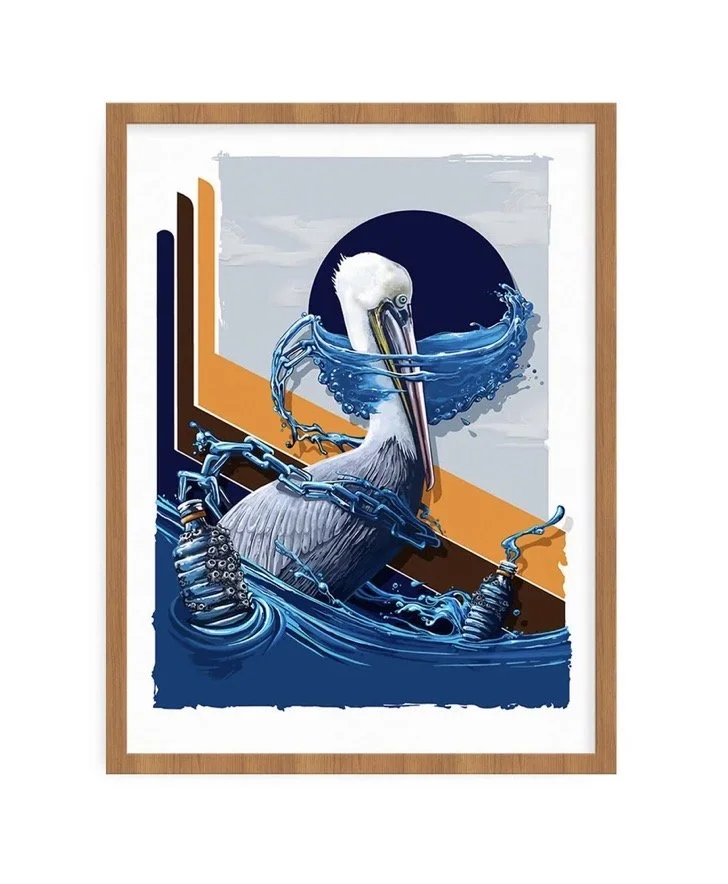
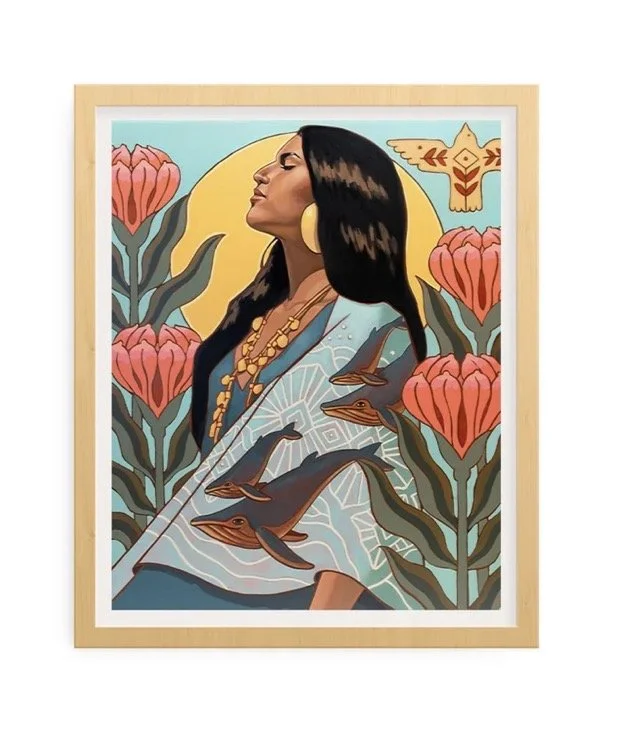
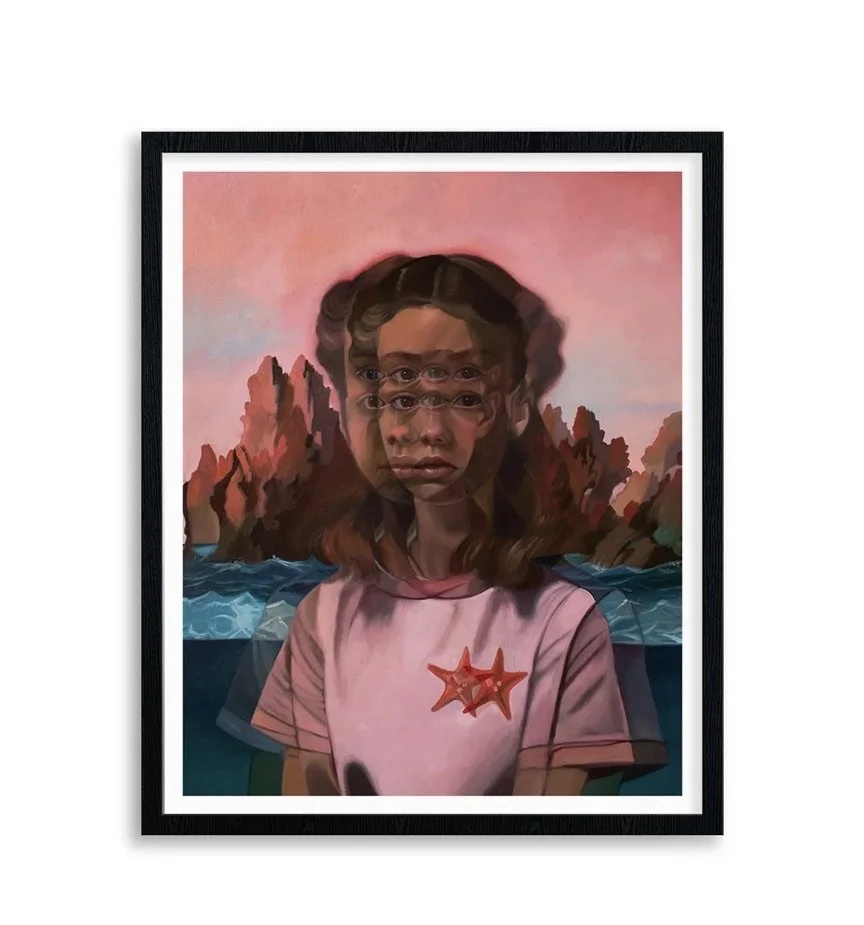
16 × 20 inch Giclée print framed
PangeaSeed printed ocean series
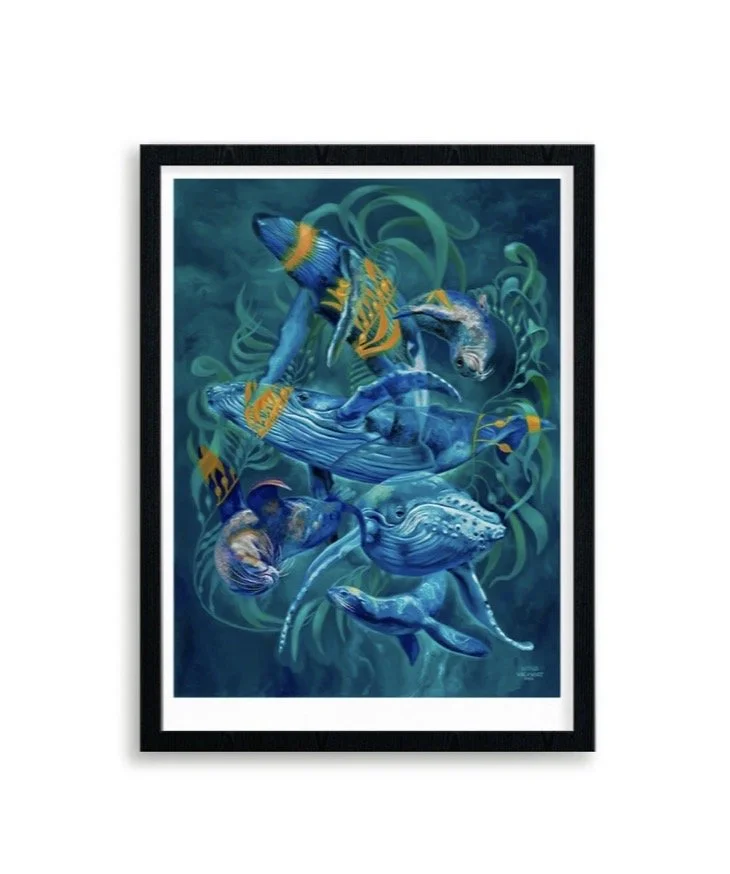
18 × 24 inch Giclée print framed
PangeaSeed printed ocean series
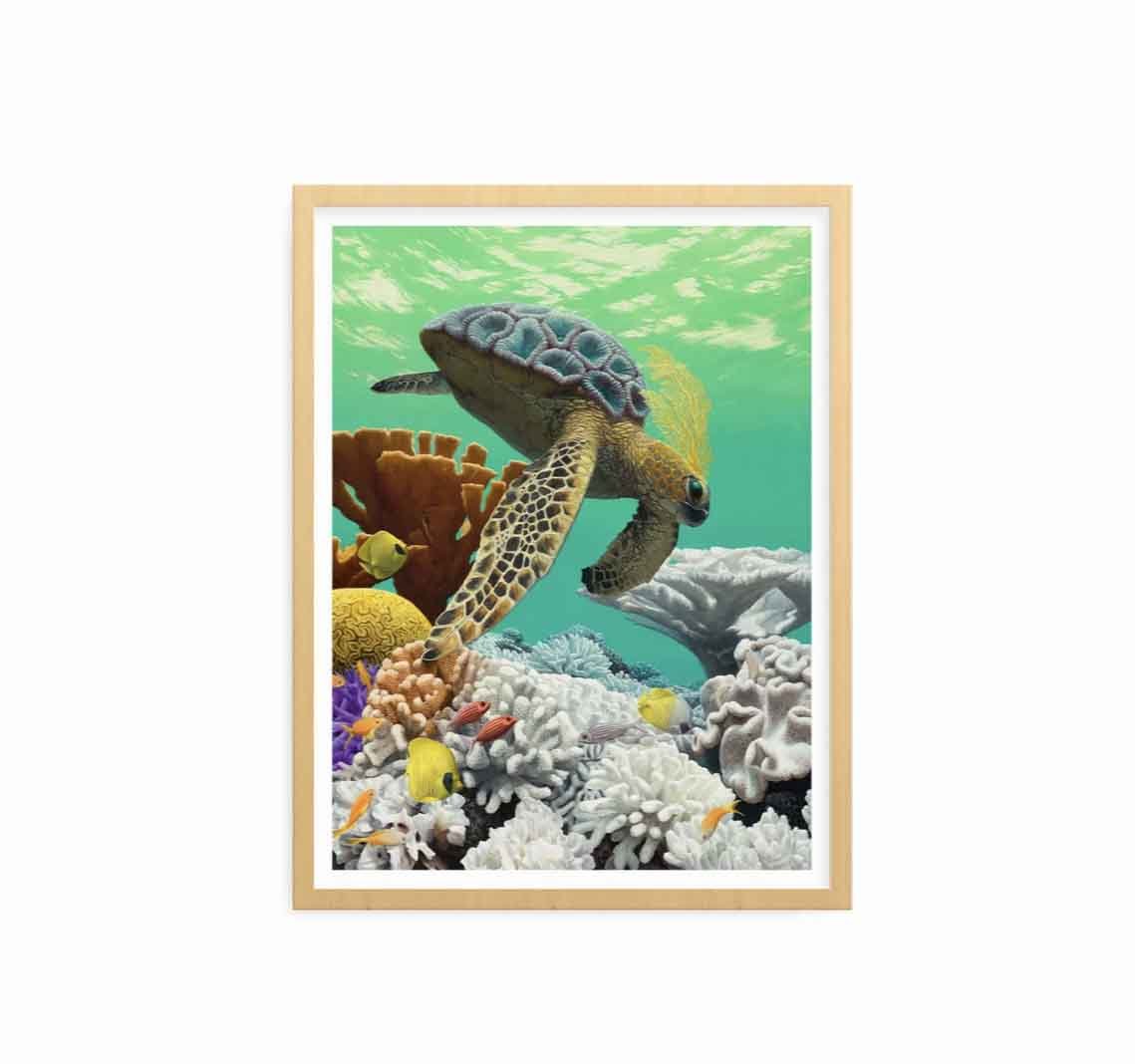
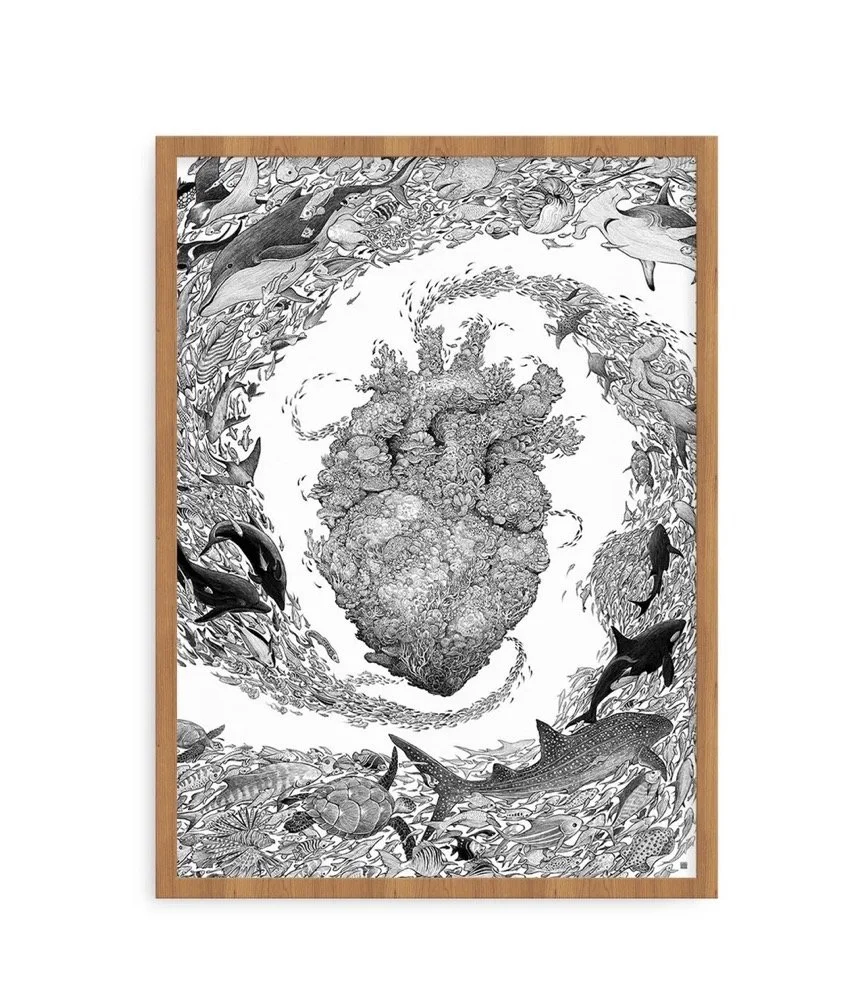
18 × 24 inch Giclée print framed
PangeaSeed printed ocean series
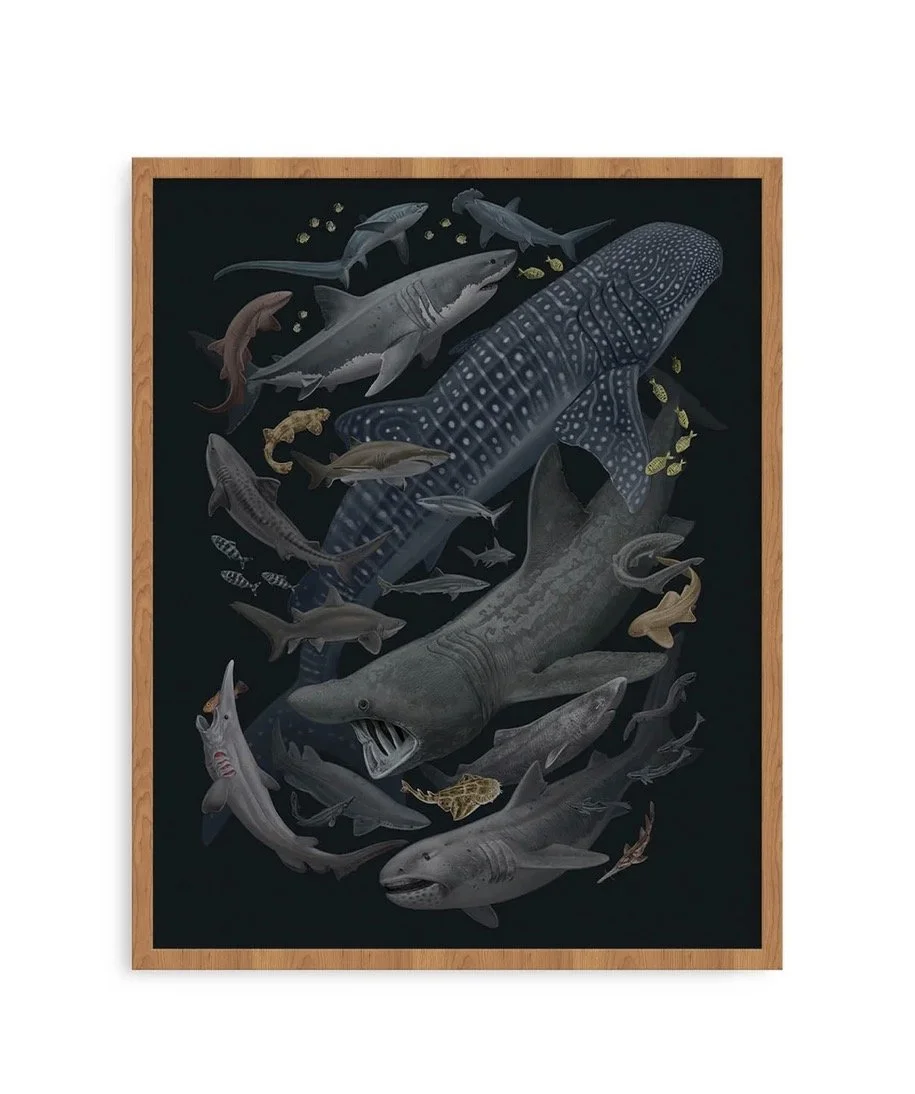
18 × 24 inch Giclée print framed
PangeaSeed printed ocean series
18 × 24 inch 5-color screen print framed
Pangeaseed printed ocean series
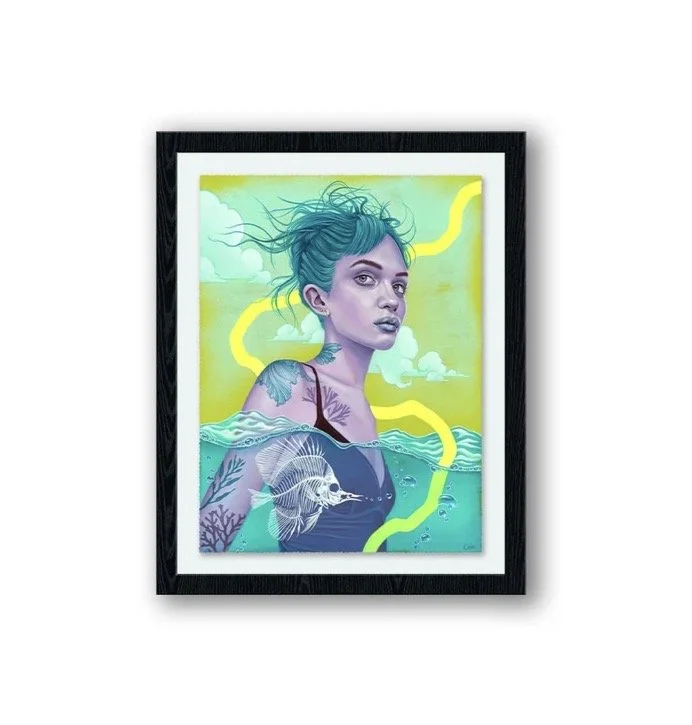
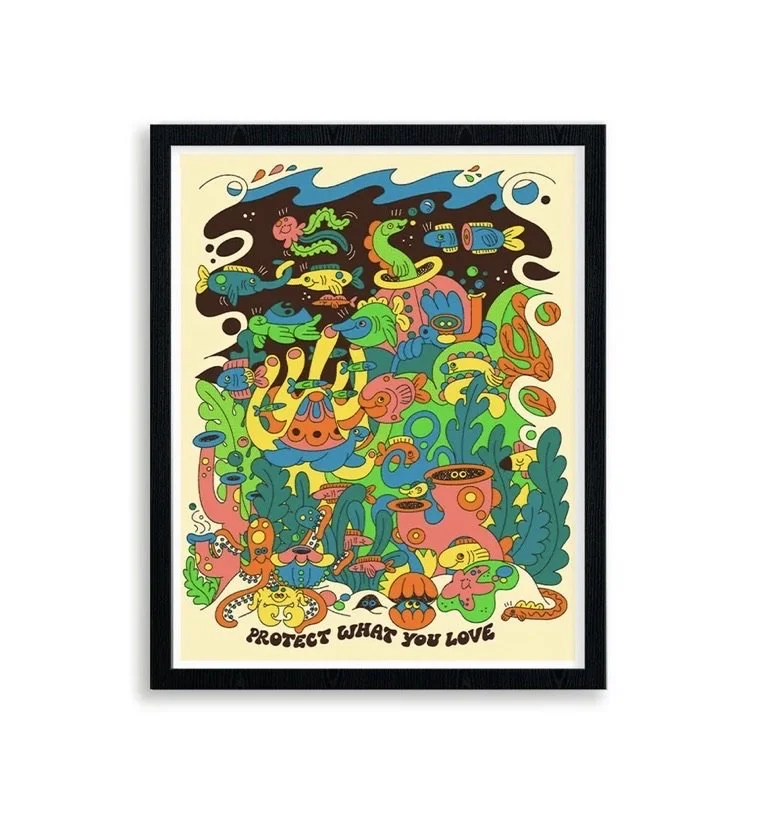
16 × 20 inch Giclée print framed
PangeaSeed printed ocean series
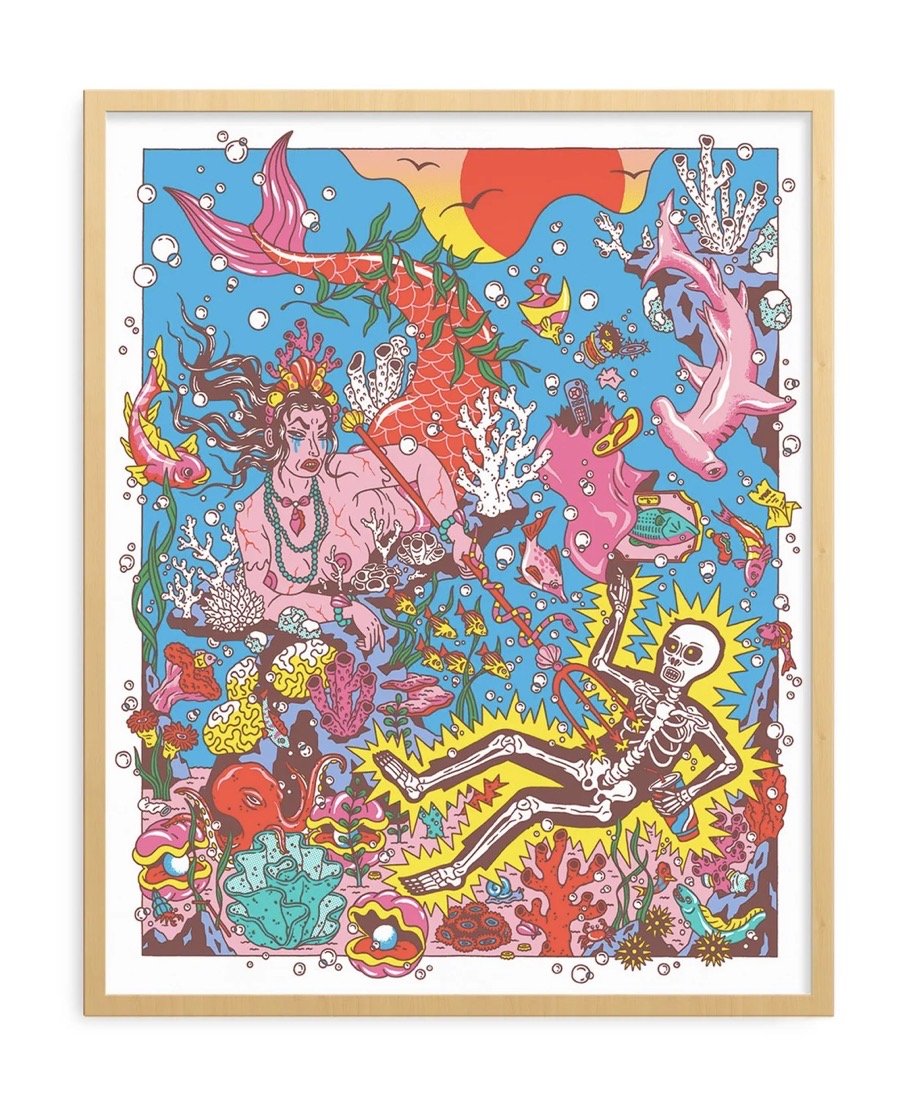
16 × 20 11-color screen print
PangeaSeed printed ocean series
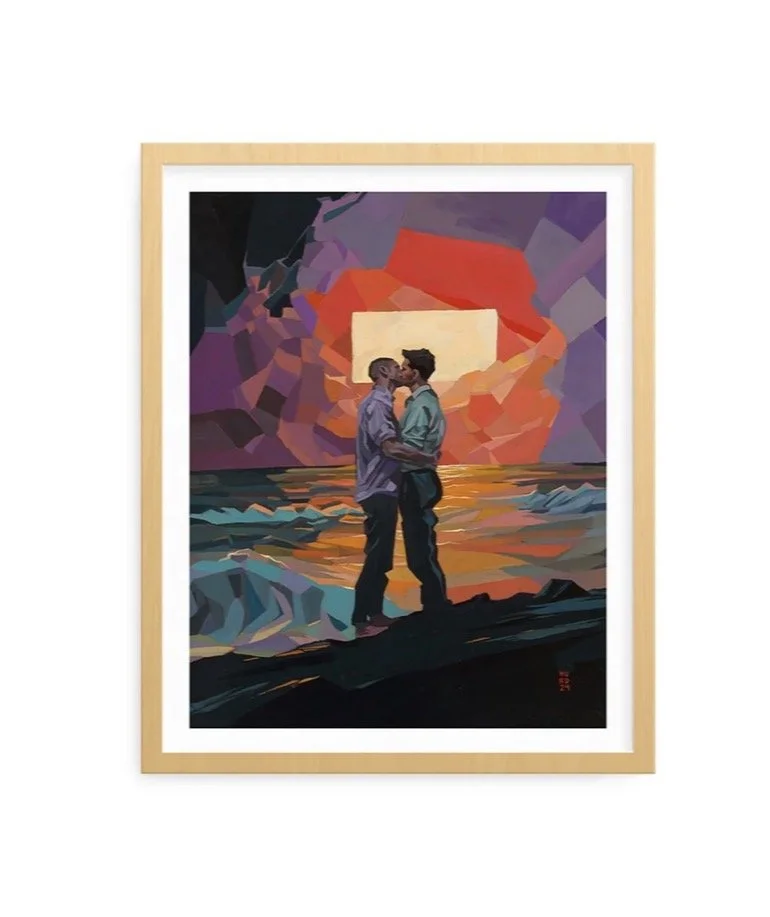
16 × 20 inch Giclée print framed
PangeaSeed printed ocean series
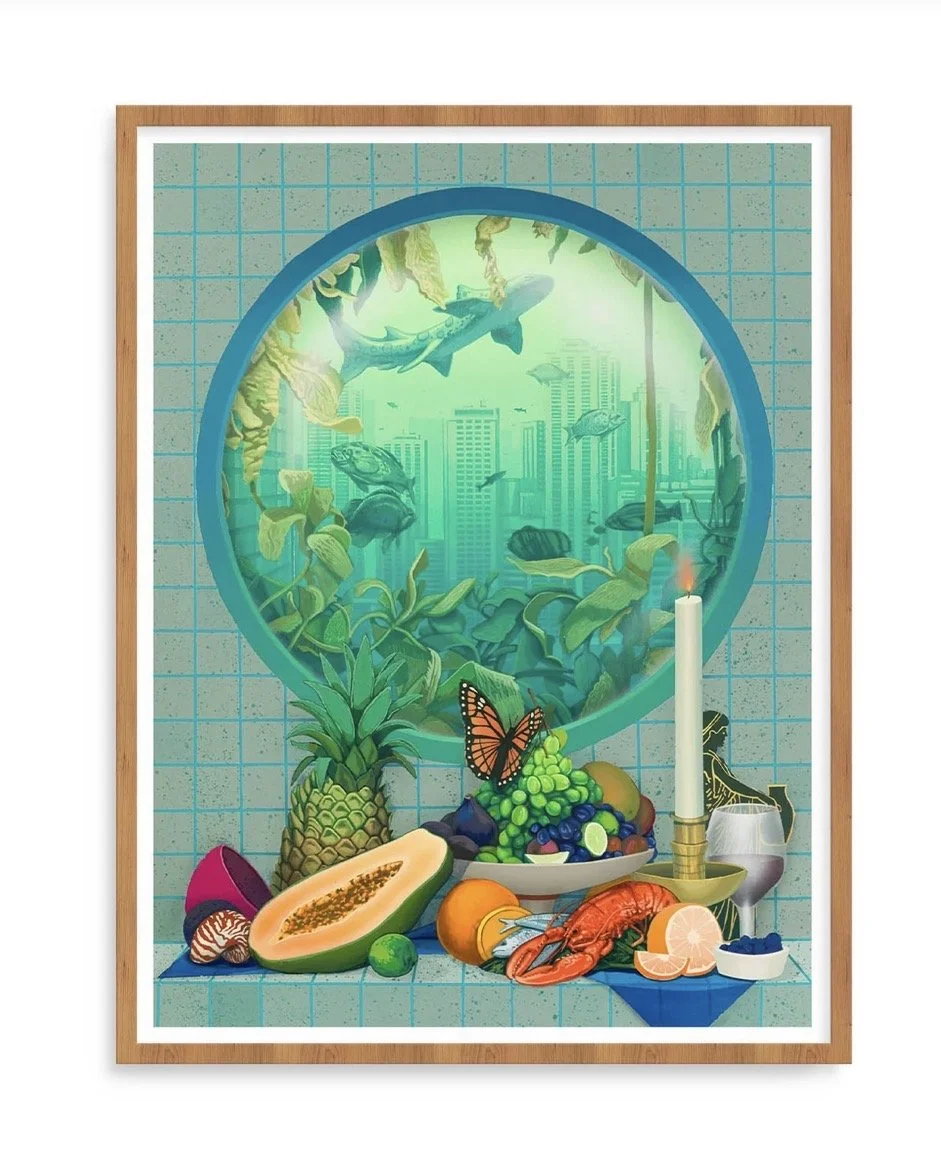
18 × 24 inch Giclée print framed
PangeaSeed printed ocean series
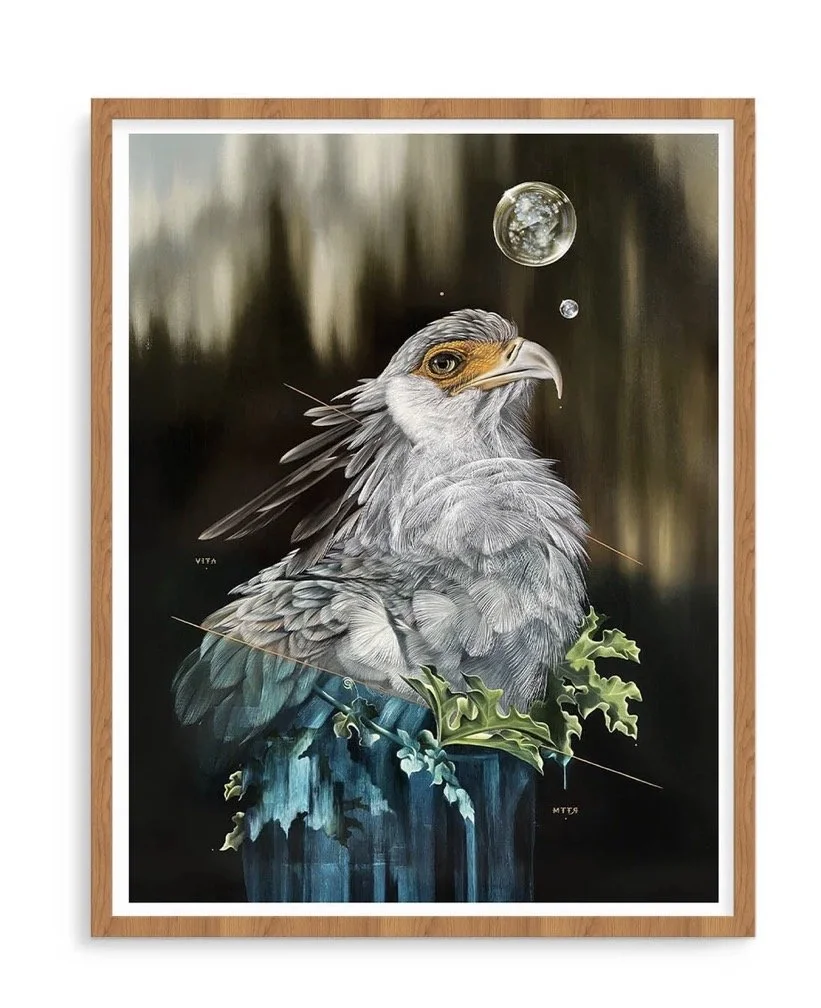
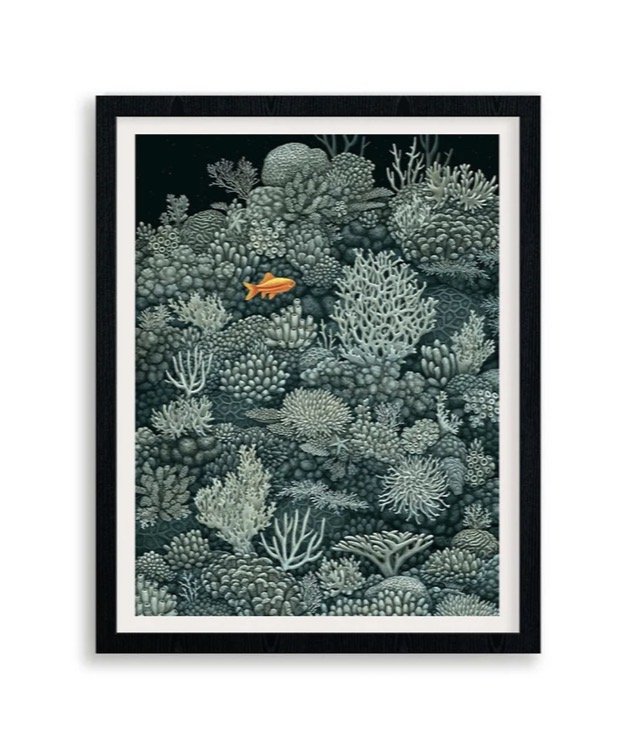
16 × 20 inch Giclée print framed
PangeaSeed print series
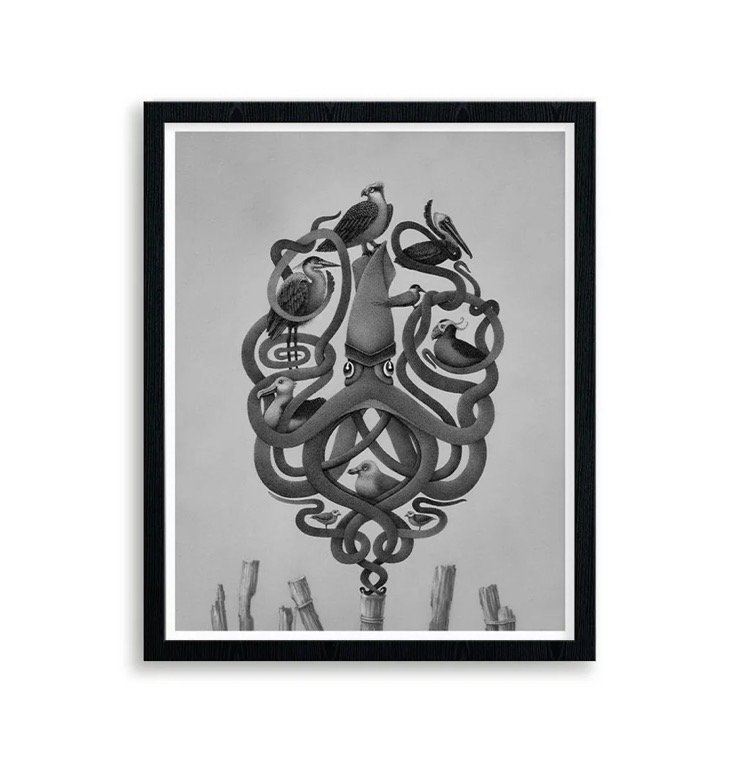
16 × 20 inch Giclée print framed
PangeaSeed printed ocean series
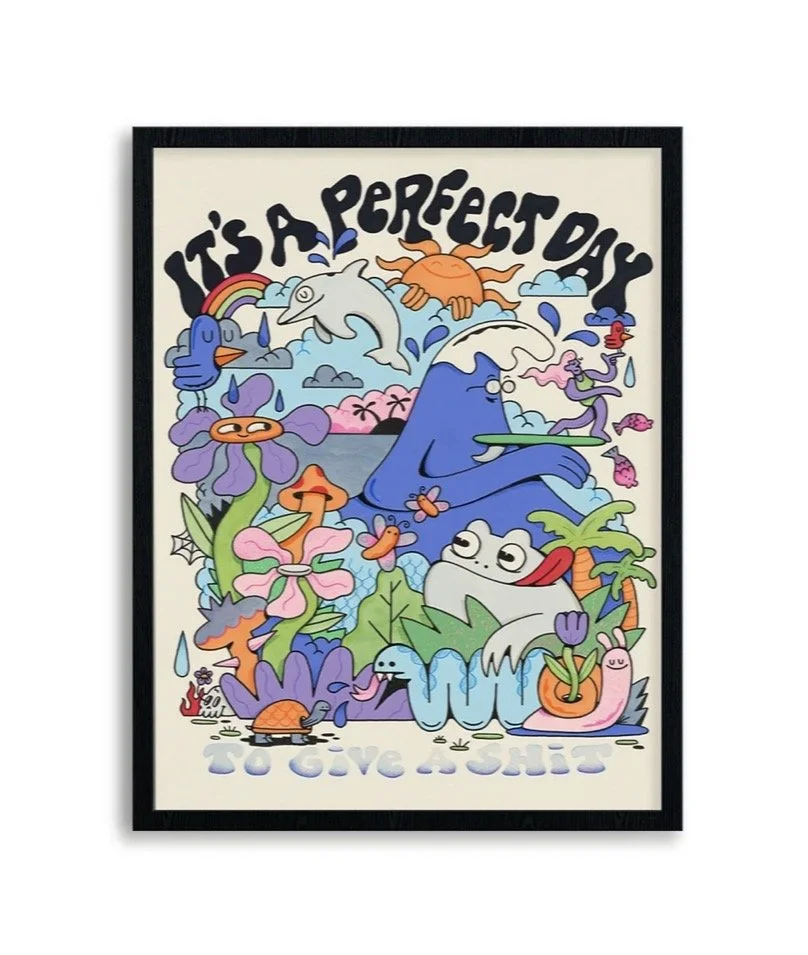
16 × 20 inch Giclée print framed
pangeaseed printed ocean series
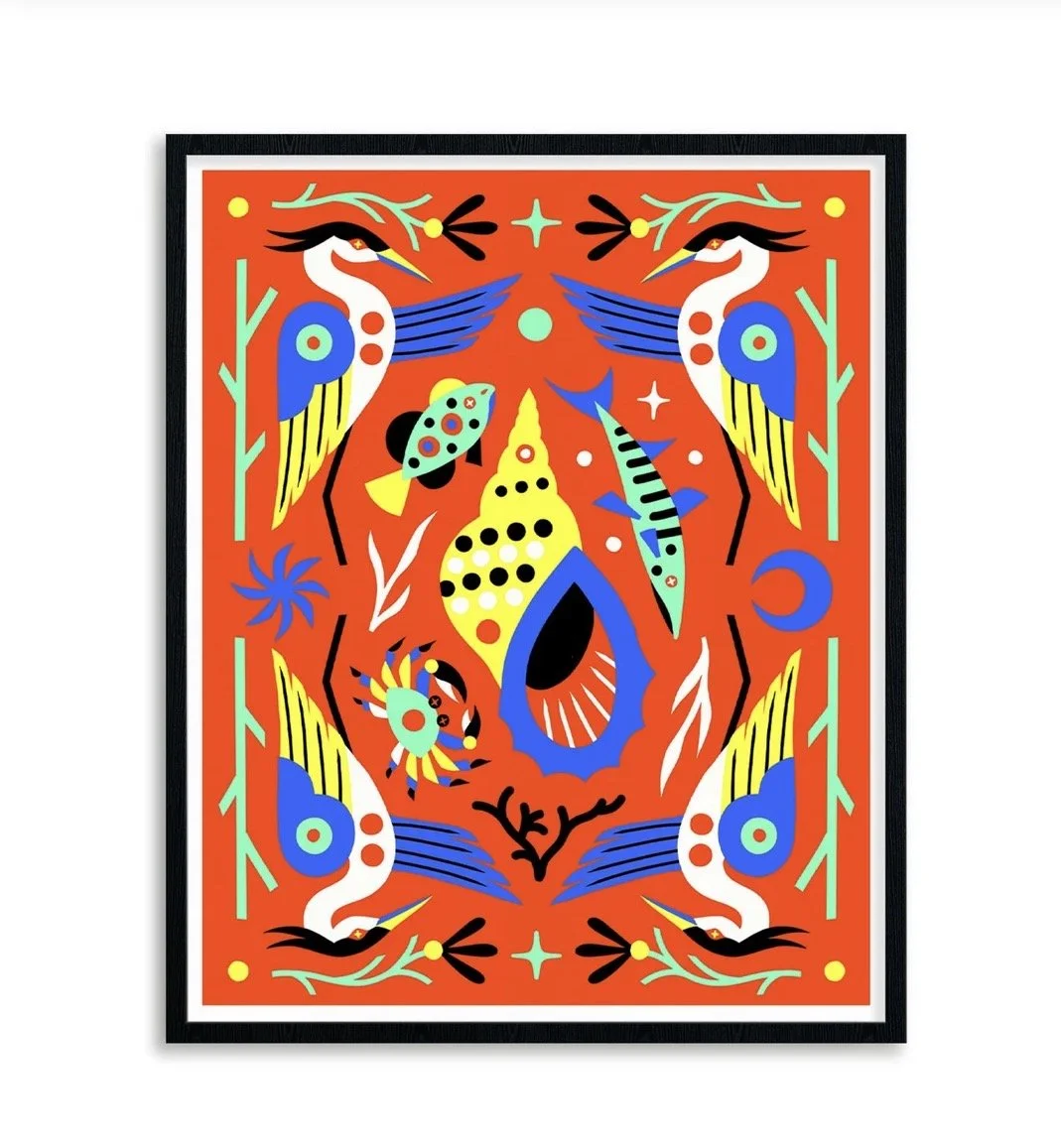
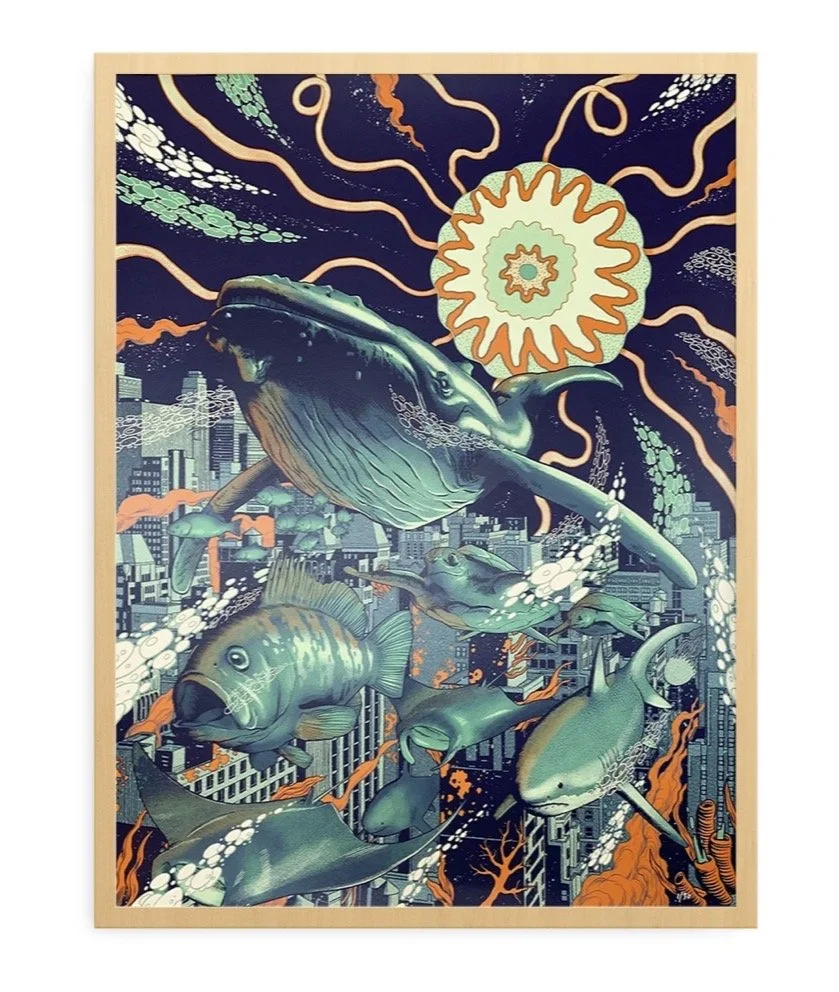
18 × 24 inch 8-color screen print framed
PangeaSeed printed ocean series