
 Image 1 of 2
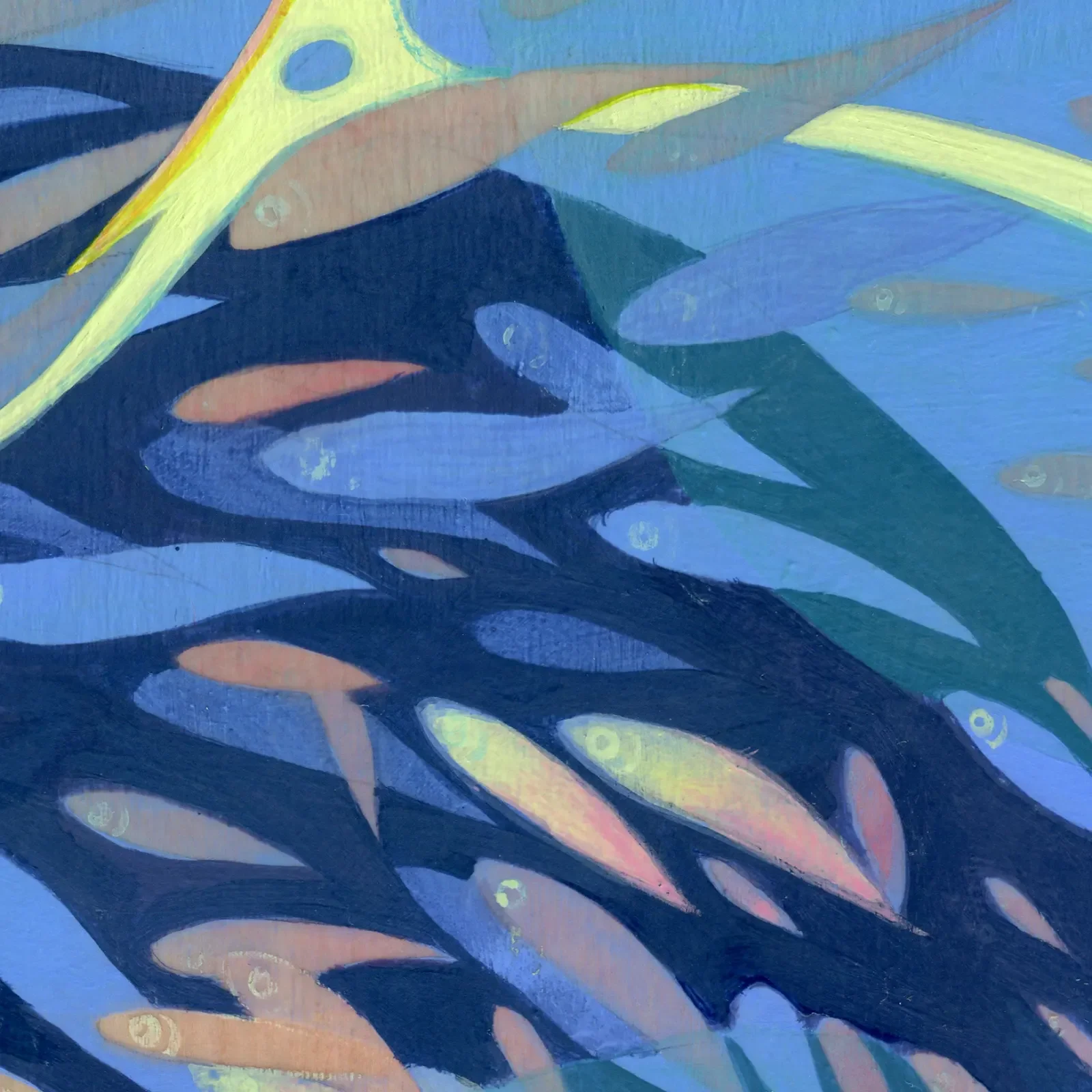 Image 2 of 2
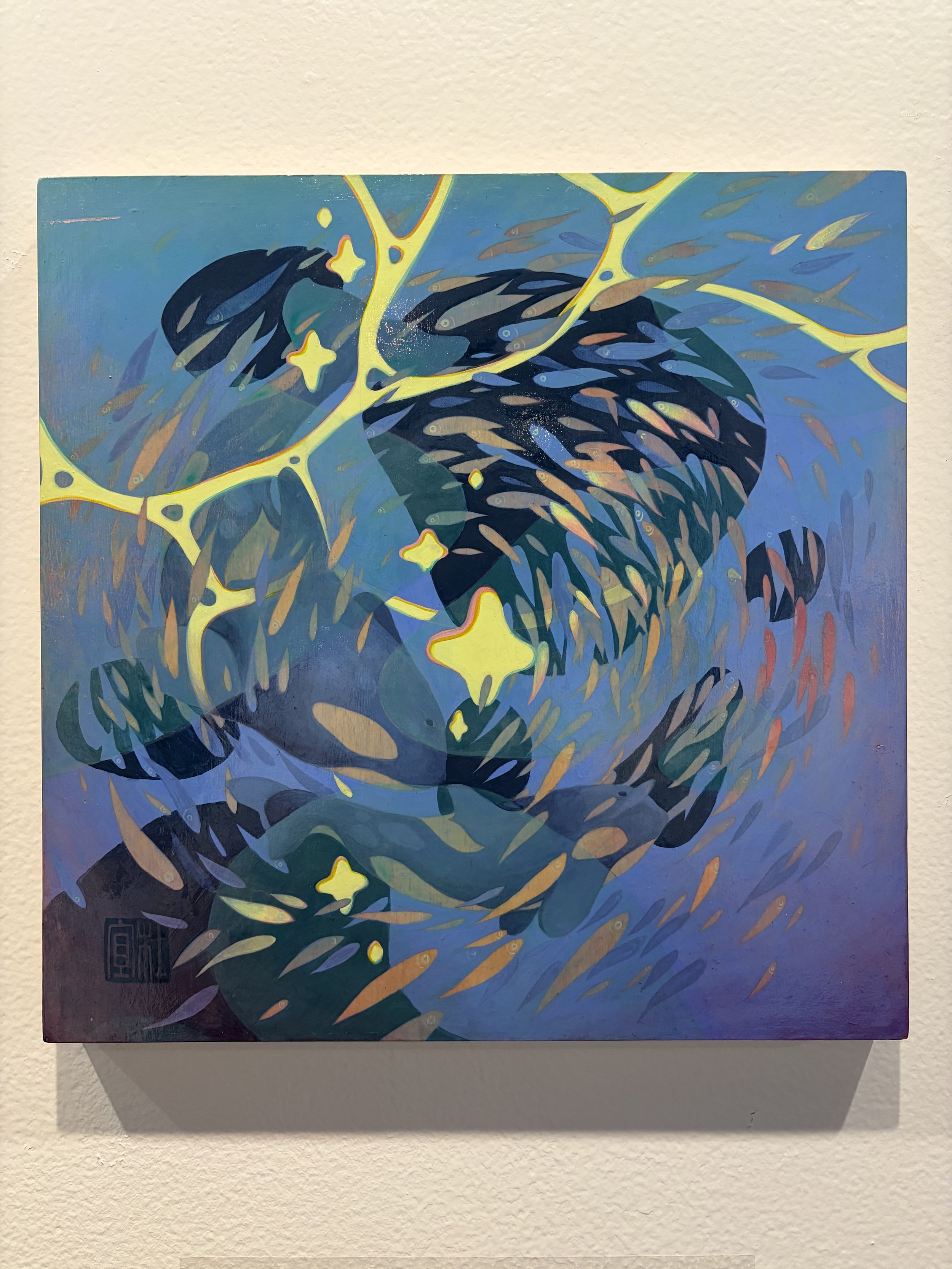
12 × 12 inch painting acrylic on cradled panel
This painting was inspired by our Southern Resident Orcas, especially Tahlequah who was in the news in 2018, when her orca emotional response seemed so human and maternal, garnering public attention, and highlighting the urgency of ocean conservation in the Salish Sea.
Unlike transient orcas that hunt marine mammals, Southern Residents mainly eat Chinook salmon, adults need 100 to 300 pounds of fish daily. Because their preferred food source has faced threats of habit loss since the late 1800s, these orcas are highly vulnerable, prompting ongoing conservation efforts. Visit orca.wa.gov to learn more about orcas, salmon, and actions to support their conservation.
The ocean is a source of inspiration as her stories reflect some of our own. Participating in nature’s cycles in a healthier, more balanced, and reciprocal way will better support healthy oceans and shared prosperity in the long term.
12 × 12 inch painting acrylic on cradled panel
This painting was inspired by our Southern Resident Orcas, especially Tahlequah who was in the news in 2018, when her orca emotional response seemed so human and maternal, garnering public attention, and highlighting the urgency of ocean conservation in the Salish Sea.
Unlike transient orcas that hunt marine mammals, Southern Residents mainly eat Chinook salmon, adults need 100 to 300 pounds of fish daily. Because their preferred food source has faced threats of habit loss since the late 1800s, these orcas are highly vulnerable, prompting ongoing conservation efforts. Visit orca.wa.gov to learn more about orcas, salmon, and actions to support their conservation.
The ocean is a source of inspiration as her stories reflect some of our own. Participating in nature’s cycles in a healthier, more balanced, and reciprocal way will better support healthy oceans and shared prosperity in the long term.