
 Image 1 of 1
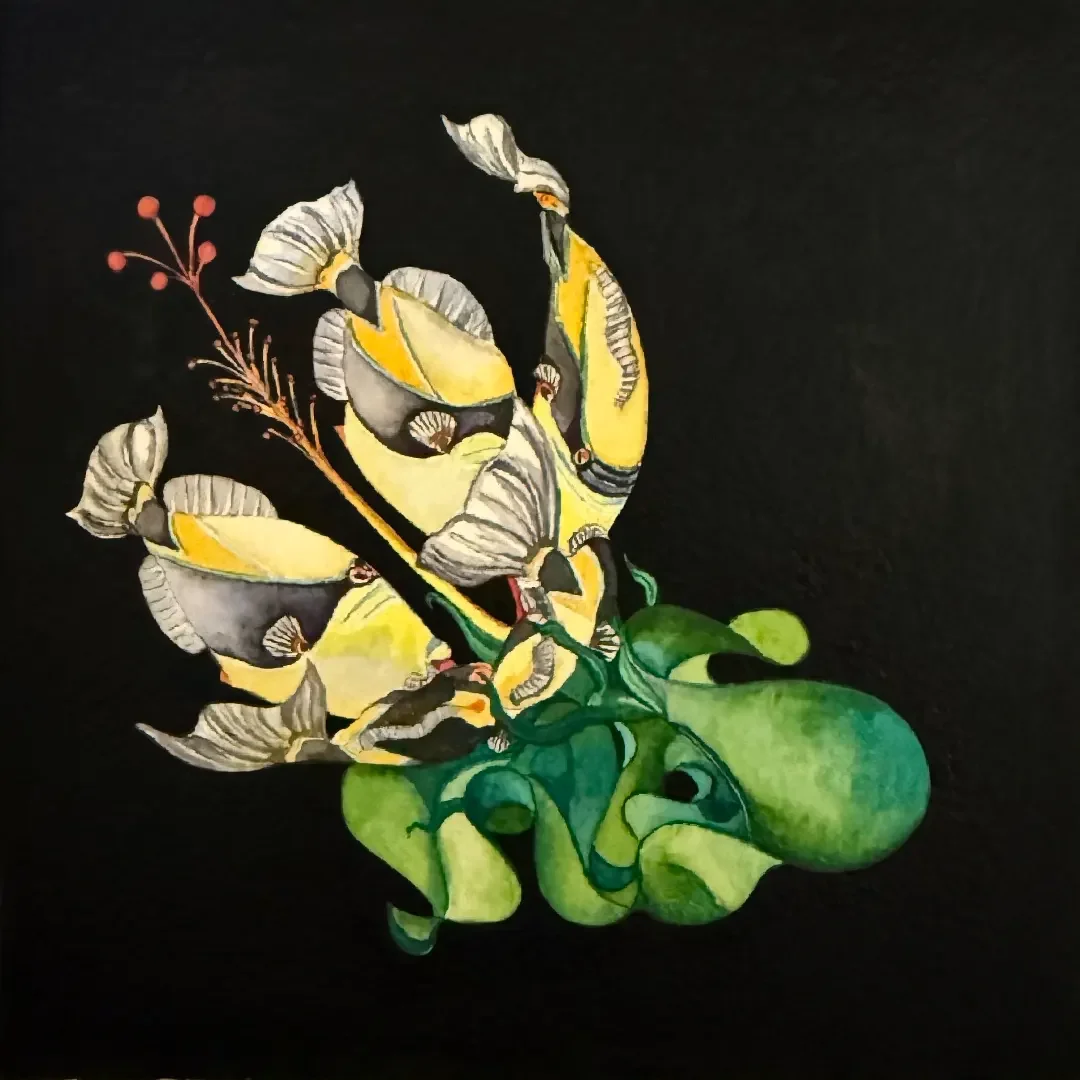
Suneeva Saldanha "Untitled"
11 × 11 inch watercolor and Ink on paper framed
The ocean is the foundation of life on Earth. It provides us with the air we breathe, the food we eat, the water cycle that sustains our ecosystems, and a stable climate that makes our planet habitable. More than half of the oxygen we breathe is produced by marine plants, while millions of people around the world depend on the ocean for their livelihoods through fishing, tourism, transportation, and trade. Beyond its physical resources, the ocean also offers beauty, inspiration, recreation, and a sense of connection with nature. Its vastness reminds us of both the power and the fragility of our planet.
When I imagine the future of our oceans, I hope to see healthy, thriving ecosystems filled with vibrant coral reefs, abundant marine life, and clean waters free from pollution. This future is possible only if we make responsible choices today. Climate change, plastic waste, overfishing, and habitat destruction have placed enormous pressure on marine ecosystems. However, growing awareness, scientific innovation, conservation efforts, and sustainable practices give hope that we can reverse much of the damage. Governments, businesses, communities, and individuals all have a role to play in protecting the oceans. By reducing pollution, supporting sustainable fishing, conserving marine habitats, and lowering carbon emissions, we can ensure that future generations inherit oceans that are as rich and life-giving as they have been for thousands of years.
The ocean has shaped humanity in countless ways. It has connected civilizations through exploration and trade, inspired art, literature, and scientific discovery, and provided countless opportunities for learning and adventure. Even for those who may not live near the coast, the ocean influences daily life through the weather, the climate, and the natural systems that sustain agriculture and freshwater supplies. Its rhythms teach us patience, resilience, and respect for the natural world. Watching the waves or listening to the sound of the sea often reminds us of the importance of balance and harmony between people and nature.
Because life began in the ocean and it continues to sustain all life on Earth, we owe the ocean our respect, gratitude, and protection. It is our responsibility to restore and preserve its ecosystems so that they continue to support biodiversity and human well-being. Every action, whether reducing plastic use, participating in beach cleanups, conserving water, or advocating for stronger environmental policies, contributes to the health of our oceans. Protecting marine ecosystems is not simply about saving sea life; it is about safeguarding our own future.
The ocean has given humanity far more than we can ever repay. It nourishes us, regulates our climate, and supports countless forms of life. By caring for it today, we ensure that generations after us will inherit a healthier planet where the oceans continue to thrive. Restoring and sustaining marine ecosystems is not just an environmental responsibility—it is a commitment to preserving the very source of life itself.
11 × 11 inch watercolor and Ink on paper framed
The ocean is the foundation of life on Earth. It provides us with the air we breathe, the food we eat, the water cycle that sustains our ecosystems, and a stable climate that makes our planet habitable. More than half of the oxygen we breathe is produced by marine plants, while millions of people around the world depend on the ocean for their livelihoods through fishing, tourism, transportation, and trade. Beyond its physical resources, the ocean also offers beauty, inspiration, recreation, and a sense of connection with nature. Its vastness reminds us of both the power and the fragility of our planet.
When I imagine the future of our oceans, I hope to see healthy, thriving ecosystems filled with vibrant coral reefs, abundant marine life, and clean waters free from pollution. This future is possible only if we make responsible choices today. Climate change, plastic waste, overfishing, and habitat destruction have placed enormous pressure on marine ecosystems. However, growing awareness, scientific innovation, conservation efforts, and sustainable practices give hope that we can reverse much of the damage. Governments, businesses, communities, and individuals all have a role to play in protecting the oceans. By reducing pollution, supporting sustainable fishing, conserving marine habitats, and lowering carbon emissions, we can ensure that future generations inherit oceans that are as rich and life-giving as they have been for thousands of years.
The ocean has shaped humanity in countless ways. It has connected civilizations through exploration and trade, inspired art, literature, and scientific discovery, and provided countless opportunities for learning and adventure. Even for those who may not live near the coast, the ocean influences daily life through the weather, the climate, and the natural systems that sustain agriculture and freshwater supplies. Its rhythms teach us patience, resilience, and respect for the natural world. Watching the waves or listening to the sound of the sea often reminds us of the importance of balance and harmony between people and nature.
Because life began in the ocean and it continues to sustain all life on Earth, we owe the ocean our respect, gratitude, and protection. It is our responsibility to restore and preserve its ecosystems so that they continue to support biodiversity and human well-being. Every action, whether reducing plastic use, participating in beach cleanups, conserving water, or advocating for stronger environmental policies, contributes to the health of our oceans. Protecting marine ecosystems is not simply about saving sea life; it is about safeguarding our own future.
The ocean has given humanity far more than we can ever repay. It nourishes us, regulates our climate, and supports countless forms of life. By caring for it today, we ensure that generations after us will inherit a healthier planet where the oceans continue to thrive. Restoring and sustaining marine ecosystems is not just an environmental responsibility—it is a commitment to preserving the very source of life itself.