
 Image 1 of 1
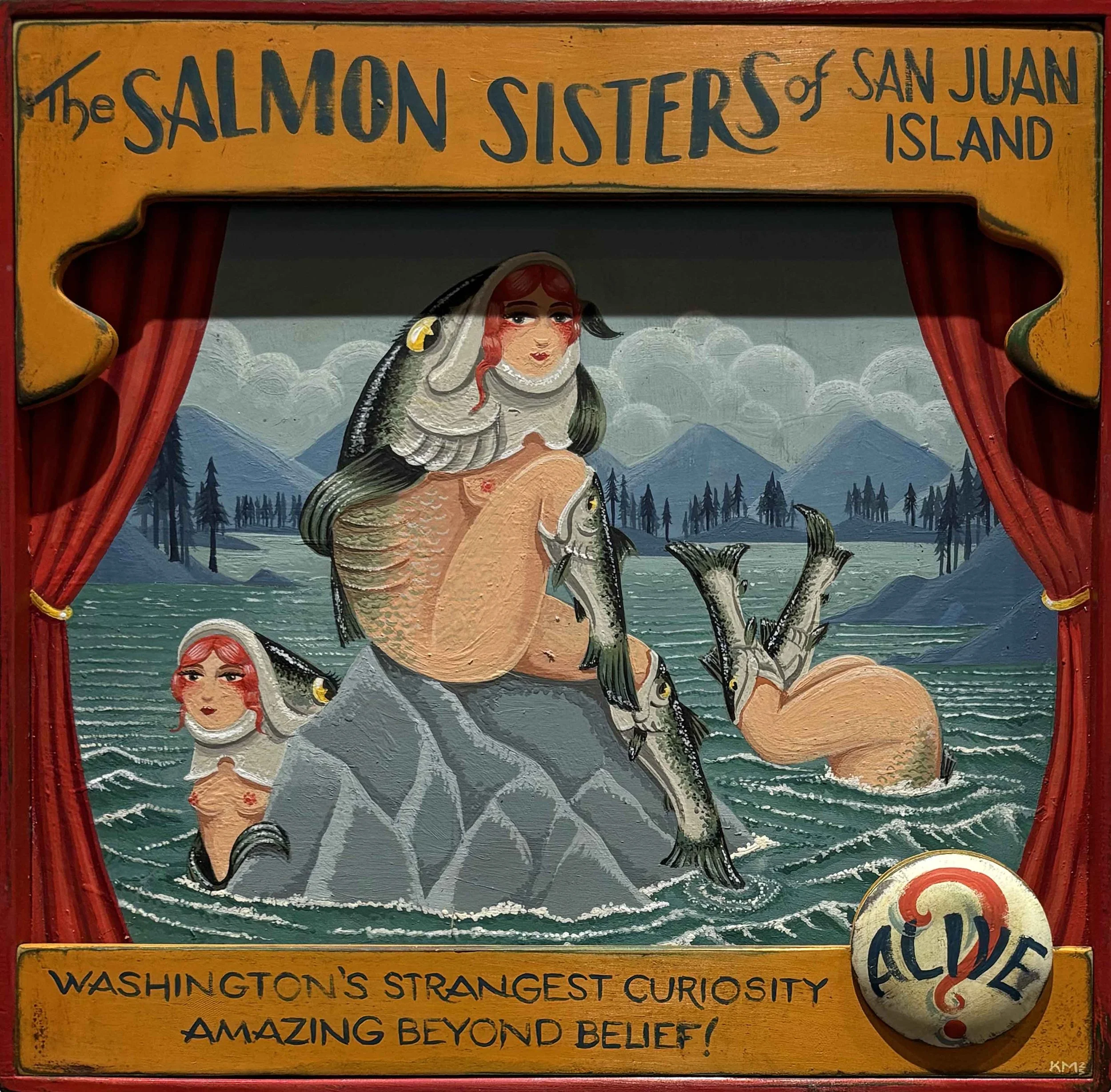
12 × 12 painting and wall sculpture
For centuries, small schools of these mythical half-woman, half-salmon beings have been spotted along the coast of the Salish Sea. The first documented sightings were made by Spanish explorers, although the Lummi tribe’s oral traditions reference similar figures long before European contact.
While eyewitness accounts have mostly been aquatic, there have been occasional, unreliable reports of sightings in the dense forests of the Olympic Peninsula, particularly during the wetter months.
These creatures are typically wary of humans, yet they appear to have no natural predators. Notably, several well-documented instances describe them taming Orcas and other sea mammals for transportation. Despite this remarkable ability, it is strongly advised not to approach them. The Salmon Sisters are not docile, and many shipwrecks—both whaling and fishing vessels—are attributed to encounters with these elusive being
12 × 12 painting and wall sculpture
For centuries, small schools of these mythical half-woman, half-salmon beings have been spotted along the coast of the Salish Sea. The first documented sightings were made by Spanish explorers, although the Lummi tribe’s oral traditions reference similar figures long before European contact.
While eyewitness accounts have mostly been aquatic, there have been occasional, unreliable reports of sightings in the dense forests of the Olympic Peninsula, particularly during the wetter months.
These creatures are typically wary of humans, yet they appear to have no natural predators. Notably, several well-documented instances describe them taming Orcas and other sea mammals for transportation. Despite this remarkable ability, it is strongly advised not to approach them. The Salmon Sisters are not docile, and many shipwrecks—both whaling and fishing vessels—are attributed to encounters with these elusive being