
 Image 1 of 1
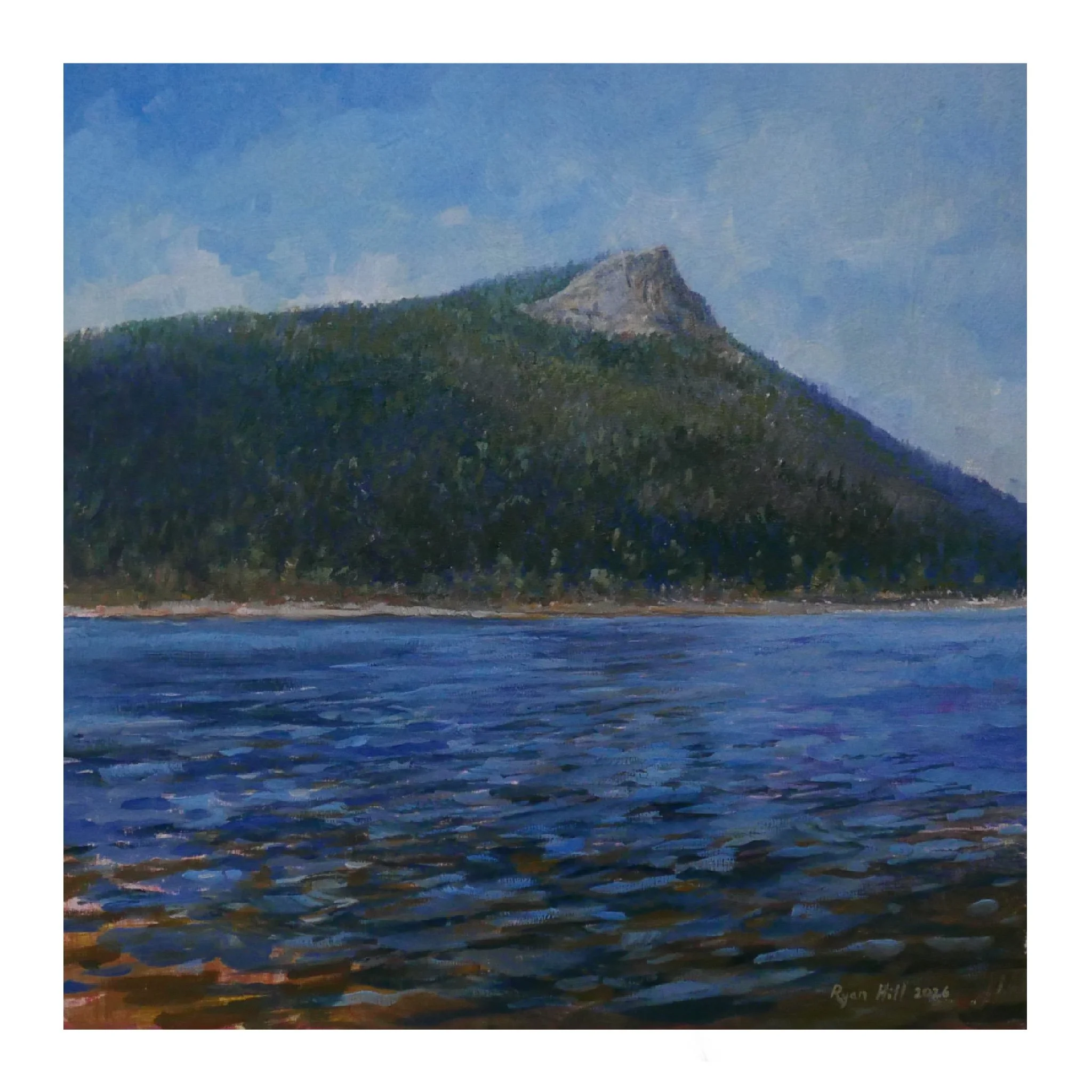
12 × 12 inch painting on canvas
Lying between the ridges south of North Bend, beneath the towering prow of the synonymous ledge, the waters of Rattlesnake Lake cover the site of a small community that housed the workers and families of logging crews, railroad workers and employees of the Seattle Water Department. Sitting on the lakeshore north of Cedar Falls along the Chicago, Milwaukee & St. Paul Railway, this community, founded in 1906, called itself Moncton after one the first settlers. Unlike the housing in Cedar Falls itself, the property was privately owned and allowed for growth amounting to 200 individuals by 1915.
In the autumn of 1914, Seattle City Light sought to provide electric power via a masonry dam built between Cedar Lake and Rattlesnake Lake. The following spring, the masonry pool began filling to capacity, with unintended consequences for the lakeside town. Porous sediments in the glacial moraines lying between the lakes allowed large quantities of water to seep into the lower lake raising the water level nearly a foot a day.
Hopes that the water could be diverted faded as houses were lifted off their foundations and left floating. Over the summer of 1915, the suddenly homeless residents set up camps on the higher elevations and the City of Seattle eventually condemned the town with a total of $47,658.03 paid out to the displaced.
The following year the waters receded enough to allow workers to demolish the remaining structures and burn the wreckage. For decades after, swimming and recreation in Rattlesnake Lake was prohibited due to fears of contamination of the water supply but it was found that the glacial sediments acted as an effective filter for impurities.
In 1970, Rattlesnake Lake Park opened to the public, allowing boating, fishing and swimming. To this day, intrepid divers can find traces of this lost history in the form of concrete foundations at the bottom of the lake.
12 × 12 inch painting on canvas
Lying between the ridges south of North Bend, beneath the towering prow of the synonymous ledge, the waters of Rattlesnake Lake cover the site of a small community that housed the workers and families of logging crews, railroad workers and employees of the Seattle Water Department. Sitting on the lakeshore north of Cedar Falls along the Chicago, Milwaukee & St. Paul Railway, this community, founded in 1906, called itself Moncton after one the first settlers. Unlike the housing in Cedar Falls itself, the property was privately owned and allowed for growth amounting to 200 individuals by 1915.
In the autumn of 1914, Seattle City Light sought to provide electric power via a masonry dam built between Cedar Lake and Rattlesnake Lake. The following spring, the masonry pool began filling to capacity, with unintended consequences for the lakeside town. Porous sediments in the glacial moraines lying between the lakes allowed large quantities of water to seep into the lower lake raising the water level nearly a foot a day.
Hopes that the water could be diverted faded as houses were lifted off their foundations and left floating. Over the summer of 1915, the suddenly homeless residents set up camps on the higher elevations and the City of Seattle eventually condemned the town with a total of $47,658.03 paid out to the displaced.
The following year the waters receded enough to allow workers to demolish the remaining structures and burn the wreckage. For decades after, swimming and recreation in Rattlesnake Lake was prohibited due to fears of contamination of the water supply but it was found that the glacial sediments acted as an effective filter for impurities.
In 1970, Rattlesnake Lake Park opened to the public, allowing boating, fishing and swimming. To this day, intrepid divers can find traces of this lost history in the form of concrete foundations at the bottom of the lake.